Product Description
Company Profile
HangZhou Xihu (West Lake) Dis. Mechanical Transmission Parts Co., Ltd. is a professional manufacturer of mechanical transmission parts, founded in 1987. Our company is committed to standard roller sprocket, single row and multi-row sprocket, non-standard sprocket, gear, rack, bevel gear, sprocket, shaft, gear shaft and other products. We have passed ISO 9001 .Xihu (West Lake) Dis. company has a number of experienced engineers, involved in plHangZhou, testing, heat treatment, inspection, the use of strict and accurate testing methods. Our sprockets are widely used in agricultural machinery, stereoscopic garage, mining equipment, woodworking machinery, petroleum machinery and other industries. Implementation standards such as ANSI.BS, DIN.KANA, etc., can also be customized according to the drawing processing
Our products have won wide praise and trust from customers for their excellent quality. HangZhou Xihu (West Lake) Dis. mechanical transmission Parts Co., Ltd. adhere to the quality of survival, innovation and development, customer first business philosophy, dedicated to domestic and foreign customers service. We warmly welcome you to negotiate business with us.
Product Description
| Standard or Nonstandard | Standard | Application | Maqchinery | |
| Hardness | Hardened Tooth Surface | Material | C45 | |
| Specification | Various Sprockets | Pitch(PCD) | 1-10M | |
| Toothed Portion Shape | Spur Gear | Teeth | 10-60Z | |
| HS Code | 84839000 | Production Capacity | 100000 Pcs/Year |
Detailed Photos
Certifications
FAQ
1. Are you manufacturer or trade company ?
We are a manufacturing factory founded in 1987 ,with trade team for international service.
2. What terms of payment you usually use ?
T/T . 30% deposit ,and 70% before finish production .Price :FOB ZheJiang .
3. Can you make products according to customer”s design ?
Yes , we can make according to customer”s drawing and samples .OED and ODM are acceptable.
4.How long is your delivery time ?
Genarally it is 5-15 days afte rthe deposit .It will take more days customized.
5. What do I need for offering a quote ?
Please offer us 2D or 3d drawing (with material ,dimension,surface treatment and other technical datas etc.), quantity ,or samples .
Then we will quote the best price .
| Application: | Electric Cars, Motorcycle, Machinery, Marine, Agricultural Machinery, Car |
|---|---|
| Hardness: | Hardened Tooth Surface |
| Gear Position: | External Gear |
| Samples: |
US$ 0.1/Piece
1 Piece(Min.Order) | Order Sample free sample
|
|---|
| Customization: |
Available
| Customized Request |
|---|
.shipping-cost-tm .tm-status-off{background: none;padding:0;color: #1470cc}
|
Shipping Cost:
Estimated freight per unit. |
about shipping cost and estimated delivery time. |
|---|
| Payment Method: |
|
|---|---|
|
Initial Payment Full Payment |
| Currency: | US$ |
|---|
| Return&refunds: | You can apply for a refund up to 30 days after receipt of the products. |
|---|
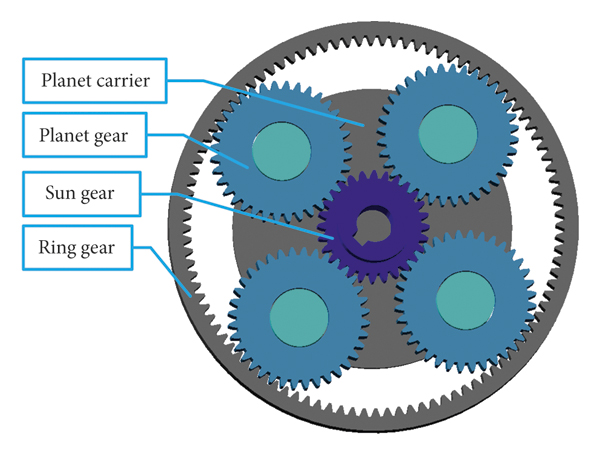
How does a sun gear contribute to the overall efficiency of a gear arrangement?
A sun gear plays a significant role in determining the overall efficiency of a gear arrangement. Let’s explore how a sun gear contributes to the efficiency of a gear system:
- Power Transmission:
The sun gear serves as the primary driver in many gear systems, transmitting power from the input source to the output component. Its contribution to power transmission efficiency is crucial. A well-designed sun gear ensures minimal power loss during the transfer of rotational force.
Efficiency is influenced by factors such as gear material, surface finish, and lubrication. The sun gear’s design, including its tooth profile, size, and alignment with other gears, affects the smoothness of power transmission, minimizing energy losses due to friction and misalignment.
- Load Distribution:
The interaction between the sun gear and other gears, such as planet gears or ring gears, influences load distribution within the gear arrangement. An efficient sun gear design ensures that the load is evenly distributed across all engaged gears, reducing the stress on individual gear teeth.
Uniform load distribution helps prevent premature wear and damage to the gears, enhancing overall efficiency and extending the gear system’s lifespan. By efficiently distributing the load, the sun gear contributes to a more balanced distribution of forces within the gear arrangement.
- Reduced Friction and Wear:
The sun gear’s smooth operation is vital for minimizing friction and wear within the gear system. When the sun gear meshes with other gears, such as planet gears or ring gears, it should have proper tooth engagement and alignment.
An accurately designed sun gear reduces sliding friction and ensures a rolling contact between the gear teeth. This rolling contact reduces wear, heat generation, and energy losses due to friction. By minimizing friction and wear, the sun gear enhances the overall efficiency of the gear arrangement.
- Optimized Gear Ratios:
The sun gear’s size and its relationship to other gears in the arrangement significantly impact the gear ratios. Efficient gear ratios are essential for achieving the desired output speed and torque in a gear system.
An optimized sun gear design, along with carefully selected sizes for other gears, allows for efficient gear ratio selection. This ensures that the gear system operates within the desired speed and torque range, maximizing the overall efficiency of the arrangement.
- Minimized Energy Losses:
An efficient sun gear design aims to minimize energy losses within the gear arrangement. Energy losses can occur due to factors such as friction, misalignment, and inefficient power transmission.
By focusing on factors like gear tooth profile, material selection, lubrication, and proper alignment, the sun gear can contribute to the reduction of energy losses. Minimizing energy losses improves the overall efficiency of the gear arrangement, ensuring more effective utilization of input power.
- System Optimization:
The sun gear’s contribution to the overall efficiency of a gear arrangement is part of a broader system optimization process. Engineers consider various factors, including gear design, material selection, lubrication, and operating conditions, to maximize the efficiency of the entire gear system.
The sun gear, as a vital component, is optimized in conjunction with other gears and system parameters to achieve the desired efficiency levels. Its design and performance directly impact the overall efficiency of the gear arrangement.
In conclusion, the sun gear’s contribution to the overall efficiency of a gear arrangement lies in its role in power transmission, load distribution, friction reduction, optimized gear ratios, and minimizing energy losses. By considering these factors and optimizing the sun gear’s design, engineers can enhance the efficiency and performance of gear systems in various applications.
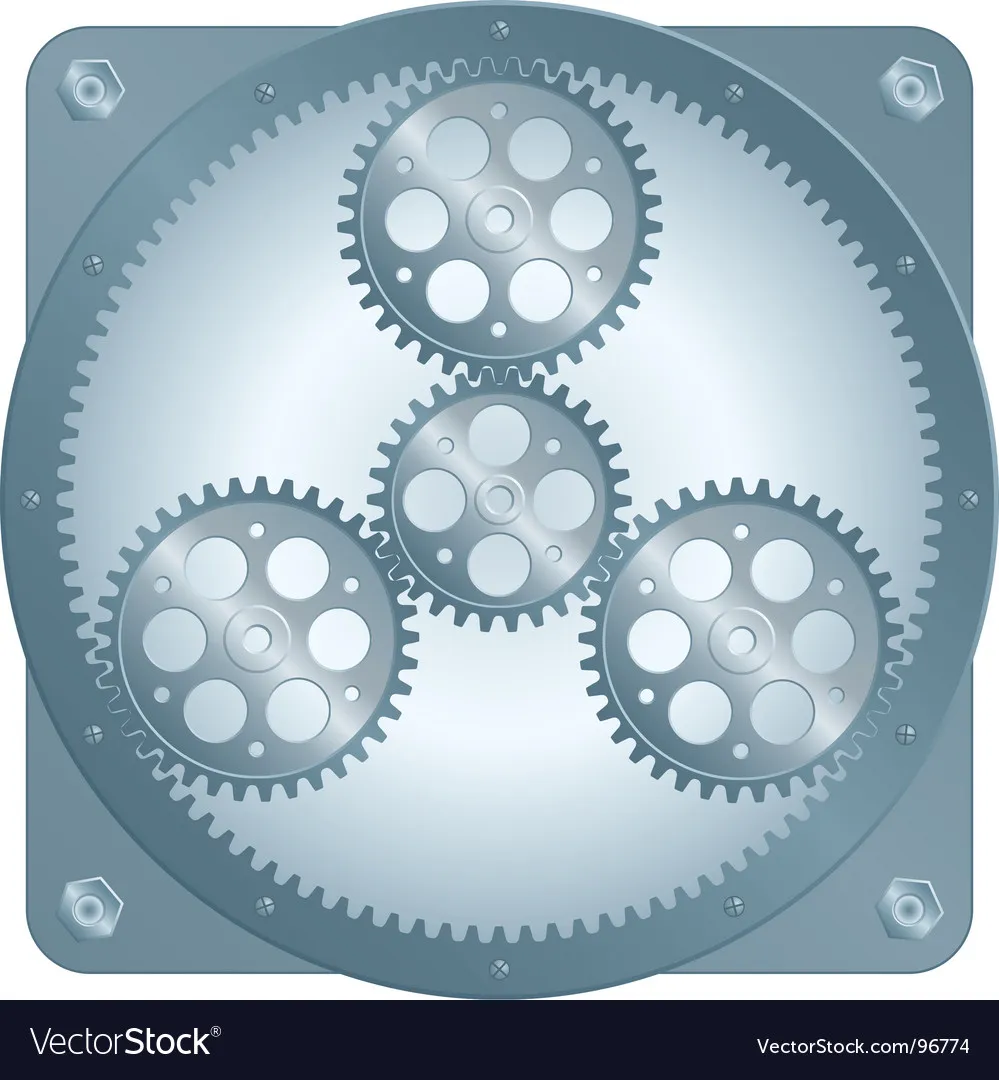
Can you explain the function of a sun gear in automatic transmissions?
The sun gear plays a crucial role in the operation of automatic transmissions. It is an essential component within the planetary gear set, which is responsible for transmitting power and controlling gear ratios in automatic transmissions. Here’s an explanation of the function of a sun gear in automatic transmissions:
- Power Input:
The sun gear serves as one of the primary power input sources in an automatic transmission. It connects to the torque converter, which is a fluid coupling that transfers engine power to the transmission. The rotation of the sun gear receives torque from the engine and acts as the initial input for the gear set.
- Gear Ratio Control:
The sun gear, along with other gears in the planetary gear set, allows for the control of gear ratios in an automatic transmission. By varying the engagement and rotation of the sun gear, different gear ratios can be achieved, providing the desired combination of torque multiplication and speed reduction or increase.
The gear ratio control is achieved through the interaction between the sun gear, planet gears, and ring gear. The sun gear is connected to the planet gears, which in turn mesh with the ring gear. The arrangement and rotation of these gears determine the gear ratio and, consequently, the output speed and torque of the transmission.
- Forward and Reverse Operation:
The sun gear’s function also extends to enabling both forward and reverse operation in automatic transmissions. By controlling the engagement of the sun gear with other gears in the planetary set, the transmission can switch between forward and reverse directions.
In the forward operation, the sun gear engages with the planet gears and the ring gear, transmitting power from the input shaft to the output shaft with a specific gear ratio. In the reverse operation, the sun gear engages with a different set of gears, causing the rotation of the output shaft to reverse its direction.
- Torque Multiplication:
Another important function of the sun gear is torque multiplication. By utilizing the planetary gear set arrangement, the sun gear can multiply or reduce torque depending on the gear ratio configuration. This torque multiplication capability allows the transmission to provide higher torque output when needed, such as during acceleration or climbing steep gradients.
- Gear Shifts:
The sun gear’s function also contributes to smooth and efficient gear shifts in automatic transmissions. As gear shifts occur, the transmission control unit adjusts the engagement of the sun gear, planet gears, and ring gear to achieve the desired gear ratio for the target speed and load conditions.
During gear shifts, the engagement of clutches or bands controlled by the transmission control unit ensures that the sun gear rotates with the desired set of gears, allowing for seamless transitions between different gear ratios. This coordinated operation of the sun gear and other gears facilitates smooth acceleration and deceleration without excessively straining the transmission components.
In summary, the sun gear in automatic transmissions serves multiple functions, including power input from the torque converter, gear ratio control through its engagement with other gears, enabling forward and reverse operation, torque multiplication for increased output, and contributing to smooth gear shifts. These functions collectively allow automatic transmissions to provide efficient power transfer, dynamic gear ratios, and smooth operation in various driving conditions.
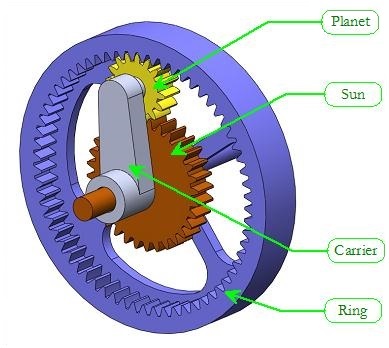
How does a sun gear affect the overall gear ratio in a system?
The presence and characteristics of a sun gear play a significant role in determining the overall gear ratio in a system. Understanding how the sun gear affects the gear ratio helps in analyzing and designing gear systems with the desired performance. Here’s an explanation of how a sun gear affects the overall gear ratio in a system:
- Number of Teeth: The number of teeth on the sun gear influences the gear ratio. In a simple gear system, where the sun gear engages with a single gear, the gear ratio is determined by the ratio of the number of teeth on the two gears. For example, if the sun gear has 10 teeth and the other gear has 30 teeth, the gear ratio would be 1:3, meaning the output gear rotates three times slower than the sun gear.
- Arrangement with Other Gears: In more complex gear systems, such as planetary gear configurations, the arrangement of the sun gear with other gears further influences the gear ratio. In a planetary gear set, the sun gear engages with multiple planet gears and an outer ring gear. By manipulating the sizes and arrangements of these gears, a wide range of gear ratios can be achieved. For instance, if the sun gear is fixed, the ring gear becomes the output and the gear ratio is determined by the relative sizes of the sun gear, planet gears, and ring gear.
- Planet Gears: The number of planet gears in a planetary gear system also affects the gear ratio. Increasing or decreasing the number of planet gears alters the gear ratio by changing the load distribution and the interaction between the sun gear and the ring gear. More planet gears generally result in a higher gear ratio, while fewer planet gears tend to reduce the gear ratio.
- Epicyclic Gear Trains: The arrangement of gears in an epicyclic gear train, which includes the sun gear, planet gears, and ring gear, allows for even more complex gear ratios. By fixing or holding certain gears while others are driven, various gear ratios can be achieved. For example, fixing the ring gear and driving the sun gear produces a different gear ratio compared to fixing the sun gear and driving the ring gear.
- Variable Gear Ratio: In some systems, the gear ratio can be varied by changing the position or speed of the sun gear. This can be achieved using mechanisms such as adjustable clutches or continuously variable transmissions (CVTs). By modifying the engagement between the sun gear and other gears, the gear ratio can be adjusted to optimize performance for different operating conditions.
In summary, the presence and characteristics of a sun gear, including the number of teeth, its arrangement with other gears, the presence of planet gears, and the overall gear system configuration, all contribute to the determination of the gear ratio. Understanding these factors allows for the design and control of gear systems with specific gear ratios to meet the requirements of various mechanical applications.


editor by CX 2023-10-12
China Standard Excavator Spare Part Planetary Sun Gear Carrier Assy Travel Final Drive Gear gear ratio calculator
Product Description
Detailed Photos
| Excavator Spare Part Planetary Sun Gear Carrier Assy Travel Final Drive Gear | |
| Product Description | |
| Place of Origin | ZheJiang , China |
| Condition | New, 1 |
| Related Parts | Excavator Spare Parts |
| Packing | Standard Export Packing |
| MOQ | 1 Piece |
| Applicable Industries | Machinery Repair Shops, Retail, Construction works |
| Supply Ability | 1 |
| Part name | planet gear kit |
Other products
WHY CHOOSE US
1.More than 10 years experience in excavator spare parts field;
2.We are experts in CHINAMFG excavator parts and have in this industry since 2571
3.Original parts from suppliers with ensured and high quality;
4.Large range of spare parts scope for excavators;
5.Have parts in stock and give you short lead time;
6.Reasonable and competitive price;
Company Profile
HangZhou Junchi construction machinery Co., Ltd. is located in HangZhou logistics capital of China. We are a dealer specialized in excavator accessories, excavator parts genuine accessories one-stop shopping center. We provide all types of Volvo/LG/PC excavator spare parts for all kinds of excavator models.
It is convenient for you to buy all parts for Volvo/LG/PC excavators together.
JUNCHI is our own brand, which integrates our industry experience over the years to provide you with products with better prices and higher quality. We are committed to meeting all your needs for excavator parts and providing you with the most perfect excavator parts solution. Use the best quality and the most competitive price to obtain long-term cooperation with customers.
We sincerely hope to cooperate with all people around the world and welcome your visit to our company, In the meanwhile, we believe that through our continuous perfecting service system and technique, you can possess the world’s best products with the world’s first – class service!
About Us
Factory
Our Warehouse
Packing and shipment
Our Advantage:
1 We have many highly qualified engineers and sale managers, with wide and specific knowledge in the sale, and repair of construction machines, the sales team prides itself on its knowledge of heavy machinery coupled with exemplary after sales service .
2 We have our transfer warehouse for all the spare parts, the warehouse is about 2000 square meter, hold about USD5,000,000.00 spare parts anytime.
3 we have high-efficient logistics operation system,which ensure shipment is on time and right.
4 our product is all over the world.
5 we hope create the future together with every Volvo/LG/PC machine customers.
FAQ
1.If I only know the excavator model, but can not offer parts No., what should I do ?
If possible, you can provide pictures of old products, nameplate or size of the parts.
2.How can I pay the order?
We can receive payment through T/T, L/C, Western Union.
3.When will get the items after I place order?
Once we receive your payment, we will deliver the goods within 24 hours; if not in stock , we will communicate with you before placing orders.
4.How can I do if there is something wrong with the items?
First of all ,we can assure the quality of our products ,if you really found something wrong ,pls provide pictures for us and we will check. After it is confirmed, pls return to us , we will offer the correct item.
5.What is your main products ?
We are specialized in excavator spare parts, such as engines/or parts, undercarriage parts, electronic parts, hydraulic parts , covering parts, attachments and so on. If you need other excavator parts, we also can supply as your requirements
| After-sales Service: | Online Support |
|---|---|
| Warranty: | 6 Months |
| Type: | Bearing |
| Application: | Excavator |
| Certification: | CE, ISO9001: 2000 |
| Condition: | New |
| Samples: |
US$ 583/Piece
1 Piece(Min.Order) | |
|---|
| Customization: |
Available
| Customized Request |
|---|
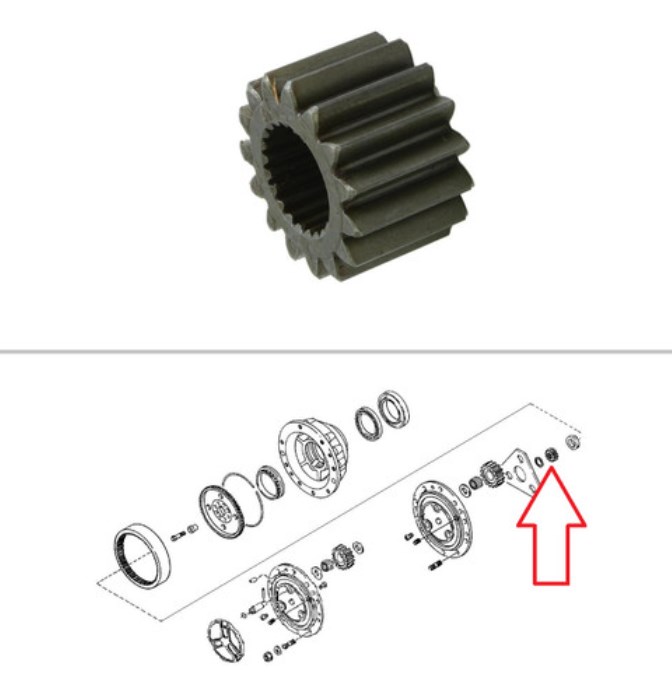
How does the size of a sun gear affect the gear ratio in planetary systems?
The size of the sun gear plays a significant role in determining the gear ratio in planetary gear systems. The gear ratio determines the relationship between the input speed and torque and the output speed and torque in the system. Here’s an explanation of how the size of the sun gear affects the gear ratio in planetary systems:
- Direct Proportion:
In a planetary gear system, the gear ratio is influenced by the relative sizes of the sun gear, planet gears, and ring gear. The gear ratio is typically expressed as the ratio of the output speed to the input speed or the ratio of the output torque to the input torque.
When considering the size of the sun gear, it is important to understand that the gear ratio is inversely proportional to the size of the sun gear. In other words, as the size of the sun gear increases, the gear ratio decreases, and vice versa.
- Power Distribution:
The size of the sun gear affects the power distribution within the planetary system. As the sun gear rotates, it engages with the planet gears, which, in turn, mesh with the ring gear. The interaction between these gears determines the gear ratio.
A larger sun gear allows for a higher number of teeth on the sun gear itself as well as on the planet gears. This means that each rotation of the sun gear will result in a smaller rotation of the planet gears and the ring gear. Consequently, a larger sun gear leads to a lower gear ratio, reducing the output speed and increasing the output torque.
- Torque Amplification:
Another factor influenced by the size of the sun gear is torque amplification. In planetary gear systems, the sun gear’s size affects the torque multiplication or reduction capabilities of the system.
With a larger sun gear, the system can provide higher torque output for a given input torque, resulting in torque amplification. This can be advantageous in applications where increased torque is required, such as during vehicle acceleration or heavy load conditions.
Conversely, a smaller sun gear reduces the torque output of the system, resulting in torque reduction. This can be useful in situations where a lower torque output is desired, such as when precise control is required or when operating in low-torque applications.
- Overall Gear Ratio Range:
The size of the sun gear also affects the overall gear ratio range that can be achieved in a planetary system. By varying the size of the sun gear relative to the other gears, different gear ratios can be achieved, allowing for a wider range of output speeds and torques.
For example, if a system requires a higher gear ratio range, a larger sun gear can be used in combination with appropriately sized planet gears and a ring gear. Conversely, if a lower gear ratio range is desired, a smaller sun gear can be employed.
It’s important to note that the size of the sun gear alone does not determine the gear ratio. The gear ratio is influenced by the combination of the sizes of all the gears within the planetary system.
In summary, the size of the sun gear in a planetary gear system has a direct impact on the gear ratio, power distribution, torque amplification, and overall gear ratio range. A larger sun gear results in a lower gear ratio, while a smaller sun gear leads to a higher gear ratio. The size of the sun gear, along with the sizes of the other gears, determines the performance characteristics of the planetary system.
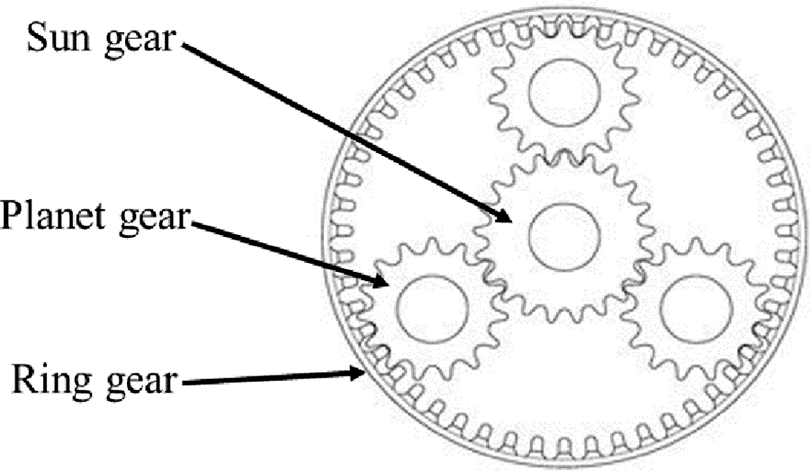
How does a sun gear handle variations in load and speed conditions?
A sun gear is designed to handle variations in load and speed conditions in mechanical systems. Its unique positioning and interaction within a planetary gear arrangement contribute to its ability to adapt to changing load and speed requirements. Here’s an explanation of how a sun gear handles variations in load and speed conditions:
- Load Distribution:
In a planetary gear system, the sun gear is located at the center and engages with multiple planet gears, which in turn interact with the outer ring gear. This configuration enables the sun gear to distribute the load among the planet gears. As the load on the system varies, the distribution of load among the planet gears adjusts accordingly. The load distribution mechanism allows the sun gear to handle variations in load conditions by effectively sharing the load across multiple contact points.
- Torque Amplification:
The arrangement of the sun gear, planet gears, and ring gear in a planetary system allows for torque amplification. By changing the number of teeth on the gears and their relative sizes, the gear ratio can be customized. This capability enables the sun gear to adapt to variations in load and speed conditions. When higher torque is required, the gear system can be configured to provide torque amplification by increasing the gear ratio. Conversely, when lower torque is needed, the gear ratio can be adjusted accordingly. This flexibility in gear ratio configuration allows the sun gear to handle variations in load and speed by adapting the torque output.
- Speed Regulation:
Another way the sun gear handles variations in load and speed conditions is through speed regulation. In a planetary gear system, the sun gear’s rotation speed is determined by the input speed and the gear ratio configuration. By adjusting the gear ratio, the rotational speed of the sun gear can be controlled. This speed regulation capability allows the sun gear to adapt to changing speed requirements. When higher speeds are necessary, the gear ratio can be adjusted to increase the rotational speed of the sun gear. Similarly, when lower speeds are desired, the gear ratio can be modified accordingly. The sun gear’s ability to regulate its rotational speed enables it to accommodate variations in load and speed conditions.
- Sturdy Construction:
Sun gears are typically constructed from durable materials such as hardened steel or other high-strength alloys. This robust construction enables them to withstand the forces generated by variations in load and speed conditions. The sturdy design of sun gears ensures that they can handle the stresses and strains associated with changing operating conditions without experiencing premature wear or failure.
In summary, a sun gear handles variations in load and speed conditions through load distribution among the planet gears, torque amplification or reduction based on the gear ratio configuration, speed regulation by adjusting the gear ratio, and its sturdy construction. These features enable the sun gear to adapt to changing requirements, ensuring reliable and efficient operation in various mechanical systems.
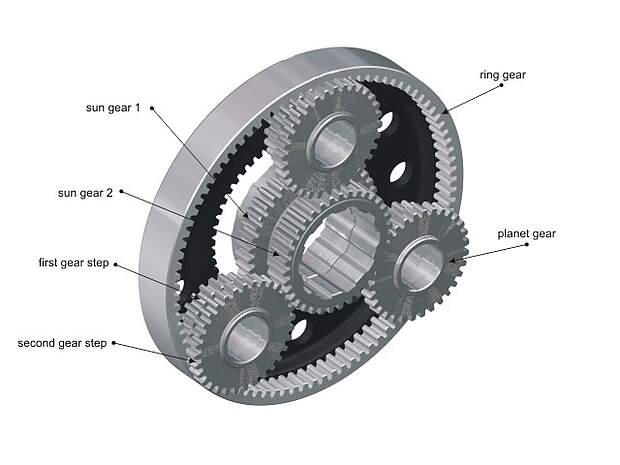
What is a sun gear and how does it function in gear systems?
A sun gear is a fundamental component in gear systems, particularly in planetary gear arrangements. It plays a crucial role in determining the overall gear ratio and power distribution within the system. Here’s an explanation of what a sun gear is and how it functions:
A sun gear is a central gear in a planetary gear set. It is typically located at the center of the gear arrangement and is surrounded by other gears, known as planet gears, as well as an outer ring gear, also called a ring gear or annulus.
The primary function of the sun gear is to transfer torque and provide the driving force in a planetary gear system. Here’s how it functions:
- Power Input: The sun gear receives power input from an external source, such as an engine or motor. It is directly connected to the input shaft and receives rotational motion and torque.
- Planet Gear Engagement: The sun gear engages with multiple planet gears, which are smaller gears that surround the sun gear and mesh with both the sun gear and the ring gear. The planet gears rotate around their own axes while also revolving around the sun gear.
- Power Distribution: As the sun gear rotates, it transmits torque to the planet gears through their meshing teeth. The planet gears, in turn, transfer the torque to the ring gear. The relative sizes of the sun gear, planet gears, and ring gear determine the gear ratio and the distribution of power within the system.
- Gear Ratio Variation: By changing the arrangement and sizes of the sun gear, planet gears, and ring gear, gear systems can achieve different gear ratios. The number of teeth on the sun gear, planet gears, and ring gear, as well as their relative sizes, determine the gear ratio. This allows gear systems to provide various output speeds and torque levels, catering to different operational requirements.
- Directional Control: In some gear systems, the sun gear can also serve as a means of controlling the direction of power transmission. By fixing or holding the sun gear while the ring gear or planet carrier is driven, the gear system can achieve different output directions, such as forward or reverse rotation.
In summary, the sun gear is a central gear in planetary gear systems, responsible for receiving power input, engaging with planet gears, distributing torque to the ring gear, and determining the overall gear ratio. Its function is crucial in achieving different speed and torque combinations, as well as controlling the direction of power transmission within gear systems.
editor by CX 2023-10-11
China Professional Customized OEM Motor Sun Gear 23 Pinion Powder Metallurgy Cylindrical Gear worm gear winch
Product Description
Excellent powder metallurgy parts metallic sintered parts
We could offer various powder metallurgy parts including iron based and copper based with top quality and cheapest price, please only send the drawing or sample to us, we will according to customer’s requirement to make it. if you are interested in our product, please do not hesitate to contact us, we would like to offer the top quality and best service for you. thank you!
How do We Work with Our Clients
1. For a design expert or a big company with your own engineering team: we prefer to receive a fully RFQ pack from you including drawing, 3D model, quantity, pictures;
2. For a start-up company owner or green hand for engineering: just send an idea that you want to try, you don’t even need to know what casting is;
3. Our sales will reply you within 24 hours to confirm further details and give the estimated quote time;
4. Our engineering team will evaluate your inquiry and provide our offer within next 1~3 working days.
5. We can arrange a technical communication meeting with you and our engineers together anytime if required.
| Place of origin: | Jangsu,China |
| Type: | Powder metallurgy sintering |
| Spare parts type: | Powder metallurgy parts |
| Machinery Test report: | Provided |
| Material: | Iron,stainless,steel,copper |
| Key selling points: | Quality assurance |
| Mould type: | Tungsten steel |
| Material standard: | MPIF 35,DIN 3571,JIS Z 2550 |
| Application: | Small home appliances,Lockset,Electric tool, automobile, |
| Brand Name: | OEM SERVICE |
| Plating: | Customized |
| After-sales Service: | Online support |
| Processing: | Powder Metallurgr,CNC Machining |
| Powder Metallurgr: | High frequency quenching, oil immersion |
| Quality Control: | 100% inspection |
The Advantage of Powder Metallurgy Process
1. Cost effective
The final products can be compacted with powder metallurgy method ,and no need or can shorten the processing of machine .It can save material greatly and reduce the production cost .
2. Complex shapes
Powder metallurgy allows to obtain complex shapes directly from the compacting tooling ,without any machining operation ,like teeth ,splines ,profiles ,frontal geometries etc.
3. High precision
Achievable tolerances in the perpendicular direction of compacting are typically IT 8-9 as sintered,improvable up to IT 5-7 after sizing .Additional machining operations can improve the precision .
4. Self-lubrication
The interconnected porosity of the material can be filled with oils ,obtaining then a self-lubricating bearing :the oil provides constant lubrication between bearing and shaft ,and the system does not need any additional external lubricant .
5. Green technology
The manufacturing process of sintered components is certified as ecological ,because the material waste is very low ,the product is recyclable ,and the energy efficiency is good because the material is not molten.
FAQ
Q1: What is the type of payment?
A: Usually you should prepay 50% of the total amount. The balance should be pay off before shipment.
Q2: How to guarantee the high quality?
A: 100% inspection. We have Carl Zeiss high-precision testing equipment and testing department to make sure every product of size,appearance and pressure test are good.
Q3: How long will you give me the reply?
A: we will contact you in 12 hours as soon as we can.
Q4. How about your delivery time?
A: Generally, it will take 25 to 35 days after receiving your advance payment. The specific delivery time depends on the items and the quantity of your order. and if the item was non standard, we have to consider extra 10-15days for tooling/mould made.
Q5. Can you produce according to the samples or drawings?
A: Yes, we can produce by your samples or technical drawings. We can build the molds and fixtures.
Q6: How about tooling Charge?
A: Tooling charge only charge once when first order, all future orders would not charge again even tooling repair or under maintance.
Q7: What is your sample policy?
A: We can supply the sample if we have ready parts in stock, but the customers have to pay the sample cost and the courier cost.
Q8: How do you make our business long-term and good relationship?
A: 1. We keep good quality and competitive price to ensure our customers benefit ;
2. We respect every customer as our friend and we sincerely do business and make friends with them, no matter where they come from.
| After-sales Service: | Online |
|---|---|
| Warranty: | 1 Year |
| Condition: | New |
| Certification: | ISO9001, IATF16949 |
| Standard: | DIN, ASTM, GOST, GB, JIS, ANSI, BS |
| Customized: | Customized |
| Samples: |
US$ 20/Piece
1 Piece(Min.Order) | |
|---|
| Customization: |
Available
| Customized Request |
|---|
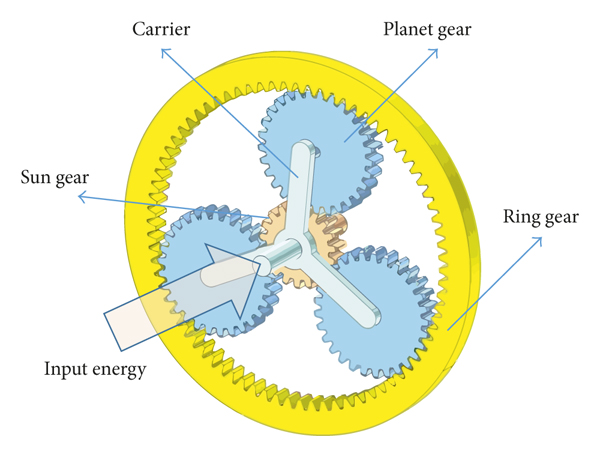
What are the safety considerations when working with sun gears in machinery?
Working with sun gears in machinery requires careful attention to safety to prevent accidents and ensure the well-being of operators. Here are some important safety considerations when working with sun gears:
- Training and Knowledge:
Operators and maintenance personnel should receive proper training and have a thorough understanding of the machinery’s operation and the specific risks associated with working with sun gears. This includes knowledge of safety procedures, maintenance protocols, and the use of personal protective equipment (PPE).
- Lockout/Tagout Procedures:
Before performing any maintenance or repair tasks on machinery involving sun gears, it is essential to follow lockout/tagout procedures. These procedures involve isolating the machinery from its power source and ensuring that it cannot be accidentally energized during maintenance. Lockout/tagout procedures help prevent unexpected movements of the gears, reducing the risk of injury.
- Personal Protective Equipment (PPE):
Appropriate personal protective equipment should be worn when working with sun gears. This may include safety glasses, gloves, protective clothing, and hearing protection, depending on the specific hazards present. PPE helps protect operators from potential injuries caused by flying debris, contact with moving parts, and excessive noise.
- Machine Guards:
Machine guards should be in place to prevent accidental contact with the sun gears during operation. Guards can be physical barriers, such as covers or enclosures, that restrict access to the gears. They act as a protective barrier and reduce the risk of entanglement or injury caused by accidental contact with rotating or moving parts.
- Maintenance and Inspection:
Regular maintenance and inspection of machinery, including sun gears, are crucial for identifying potential issues and preventing malfunctions or failures. Maintenance tasks should be carried out following manufacturer guidelines and recommendations. Inspection of gears should include checking for signs of wear, proper lubrication, and alignment.
- Proper Handling and Lifting:
When handling sun gears or transporting them within a facility, proper lifting techniques and equipment should be used. Sun gears can be heavy and require appropriate lifting devices, such as cranes or hoists, to avoid strain or injuries. Operators should also ensure that gears are securely fastened or stored to prevent them from falling or causing accidents.
- Risk Assessment:
A comprehensive risk assessment should be conducted to identify hazards associated with sun gears and their machinery. The assessment should consider factors such as gear size, rotational speed, pinch points, and potential for entanglement. Based on the assessment, appropriate safety measures and controls should be implemented to mitigate identified risks.
- Emergency Procedures:
Clear emergency procedures should be established and communicated to all personnel working with sun gears. These procedures should include protocols for responding to accidents, injuries, or equipment malfunctions. Operators should be familiar with emergency shutdown procedures and know how to safely stop the machinery in case of an emergency.
By adhering to these safety considerations, operators and maintenance personnel can minimize the risk of accidents and promote a safe working environment when working with sun gears in machinery.
How does a sun gear handle variations in load and speed conditions?
A sun gear is designed to handle variations in load and speed conditions in mechanical systems. Its unique positioning and interaction within a planetary gear arrangement contribute to its ability to adapt to changing load and speed requirements. Here’s an explanation of how a sun gear handles variations in load and speed conditions:
- Load Distribution:
In a planetary gear system, the sun gear is located at the center and engages with multiple planet gears, which in turn interact with the outer ring gear. This configuration enables the sun gear to distribute the load among the planet gears. As the load on the system varies, the distribution of load among the planet gears adjusts accordingly. The load distribution mechanism allows the sun gear to handle variations in load conditions by effectively sharing the load across multiple contact points.
- Torque Amplification:
The arrangement of the sun gear, planet gears, and ring gear in a planetary system allows for torque amplification. By changing the number of teeth on the gears and their relative sizes, the gear ratio can be customized. This capability enables the sun gear to adapt to variations in load and speed conditions. When higher torque is required, the gear system can be configured to provide torque amplification by increasing the gear ratio. Conversely, when lower torque is needed, the gear ratio can be adjusted accordingly. This flexibility in gear ratio configuration allows the sun gear to handle variations in load and speed by adapting the torque output.
- Speed Regulation:
Another way the sun gear handles variations in load and speed conditions is through speed regulation. In a planetary gear system, the sun gear’s rotation speed is determined by the input speed and the gear ratio configuration. By adjusting the gear ratio, the rotational speed of the sun gear can be controlled. This speed regulation capability allows the sun gear to adapt to changing speed requirements. When higher speeds are necessary, the gear ratio can be adjusted to increase the rotational speed of the sun gear. Similarly, when lower speeds are desired, the gear ratio can be modified accordingly. The sun gear’s ability to regulate its rotational speed enables it to accommodate variations in load and speed conditions.
- Sturdy Construction:
Sun gears are typically constructed from durable materials such as hardened steel or other high-strength alloys. This robust construction enables them to withstand the forces generated by variations in load and speed conditions. The sturdy design of sun gears ensures that they can handle the stresses and strains associated with changing operating conditions without experiencing premature wear or failure.
In summary, a sun gear handles variations in load and speed conditions through load distribution among the planet gears, torque amplification or reduction based on the gear ratio configuration, speed regulation by adjusting the gear ratio, and its sturdy construction. These features enable the sun gear to adapt to changing requirements, ensuring reliable and efficient operation in various mechanical systems.
How does a sun gear affect the overall gear ratio in a system?
The presence and characteristics of a sun gear play a significant role in determining the overall gear ratio in a system. Understanding how the sun gear affects the gear ratio helps in analyzing and designing gear systems with the desired performance. Here’s an explanation of how a sun gear affects the overall gear ratio in a system:
- Number of Teeth: The number of teeth on the sun gear influences the gear ratio. In a simple gear system, where the sun gear engages with a single gear, the gear ratio is determined by the ratio of the number of teeth on the two gears. For example, if the sun gear has 10 teeth and the other gear has 30 teeth, the gear ratio would be 1:3, meaning the output gear rotates three times slower than the sun gear.
- Arrangement with Other Gears: In more complex gear systems, such as planetary gear configurations, the arrangement of the sun gear with other gears further influences the gear ratio. In a planetary gear set, the sun gear engages with multiple planet gears and an outer ring gear. By manipulating the sizes and arrangements of these gears, a wide range of gear ratios can be achieved. For instance, if the sun gear is fixed, the ring gear becomes the output and the gear ratio is determined by the relative sizes of the sun gear, planet gears, and ring gear.
- Planet Gears: The number of planet gears in a planetary gear system also affects the gear ratio. Increasing or decreasing the number of planet gears alters the gear ratio by changing the load distribution and the interaction between the sun gear and the ring gear. More planet gears generally result in a higher gear ratio, while fewer planet gears tend to reduce the gear ratio.
- Epicyclic Gear Trains: The arrangement of gears in an epicyclic gear train, which includes the sun gear, planet gears, and ring gear, allows for even more complex gear ratios. By fixing or holding certain gears while others are driven, various gear ratios can be achieved. For example, fixing the ring gear and driving the sun gear produces a different gear ratio compared to fixing the sun gear and driving the ring gear.
- Variable Gear Ratio: In some systems, the gear ratio can be varied by changing the position or speed of the sun gear. This can be achieved using mechanisms such as adjustable clutches or continuously variable transmissions (CVTs). By modifying the engagement between the sun gear and other gears, the gear ratio can be adjusted to optimize performance for different operating conditions.
In summary, the presence and characteristics of a sun gear, including the number of teeth, its arrangement with other gears, the presence of planet gears, and the overall gear system configuration, all contribute to the determination of the gear ratio. Understanding these factors allows for the design and control of gear systems with specific gear ratios to meet the requirements of various mechanical applications.
editor by CX 2023-10-08
China Hot selling CZPT Powder Metallurgy CNC Machinery Precision Transmission Pinion Sun Spur Gear with Hot selling
Product Description
IHF Powder Metallurgy CNC Machinery Precision Transmission Pinion Sun Spur Gear
The precision of CHINAMFG gear grinding precision gear can reach 5~6 levels. The corresponding dimensional accuracy can be achieved through precision gear grinding machine and grinder. It has the characteristics of stable transmission, low noise, long service life, and is suitable for high-power and heavy load.
Product Parameters
| Product name | Spur Gear & Helical Gear & Gear Shaft |
| Customized service | OEM, drawings or samples customize |
| Materials Available | Stainless Steel, Carbon Steel, S45C, SCM415, 20CrMoTi, 40Cr, Brass, SUS303/304, Bronze, Iron, Aluminum Alloy etc |
| Heat Treatment | Quenching & Tempering, Carburizing & Quenching, High-frequency Hardening, Carbonitriding…… |
| Surface Treatment | Conditioning, Carburizing and Quenching,Tempering ,High frequency quenching, Tempering, Blackening, QPQ, Cr-plating, Zn-plating, Ni-plating, Electroplate, Passivation, Picking, Plolishing, Lon-plating, Chemical vapor deposition(CVD), Physical vapour deposition(PVD)… |
| BORE | Finished bore, Pilot Bore, Special request |
| Processing Method | Molding, Shaving, Hobbing, Drilling, Tapping, Reaming, Manual Chamfering, Grinding etc |
| Pressure Angle | 20 Degree |
| Hardness | 55- 60HRC |
| Size | Customer Drawings & ISO standard |
| Package | Wooden Case/Container and pallet, or made-to-order |
| Certificate | ISO9001:2008 |
| Machining Process | Gear Hobbing, Gear Milling, Gear Shaping, Gear Broaching, Gear Shaving, Gear Grinding and Gear Lapping |
| Applications | Printing Equipment Industry, Laser Equipment Industry, Automated Assemblyline Industry, Woodening Industry, Packaging Equipment Industry, Logistics storage Machinery Industry, Robot Industry, Machine Tool Equipment Industry |
Company Profile
Packaging & Shipping
FAQ
| Main markets | North America, South America,Eastern Europe,Weat Europe,North Europe.South Europe,Asia |
| How to order | *You send us drawing or sample |
| *We carry through project assessment | |
| *We give you our design for your confirmation | |
| *We make the sample and send it to you after you confirmed our design | |
| *You confirm the sample then place an order and pay us 30% deposit | |
| *We start producing | |
| *When the goods is done,you pay us the balance after you confirmed pictures or tracking numbers | |
| *Trade is done,thank you! |
| Warranty: | One Year |
|---|---|
| Condition: | New |
| Certification: | RoHS, ISO9001 |
| Standard: | DIN, GB, JIS, Agma |
| Customized: | Customized |
| Material: | Stainless Steel |
| Samples: |
US$ 10/Piece
1 Piece(Min.Order) | |
|---|
| Customization: |
Available
| Customized Request |
|---|
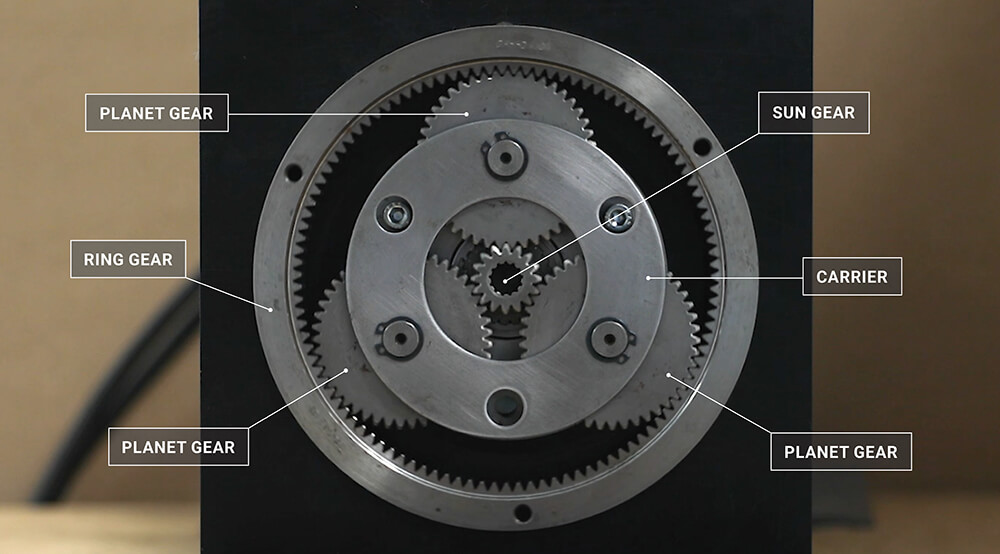
Can sun gears be used in automotive applications?
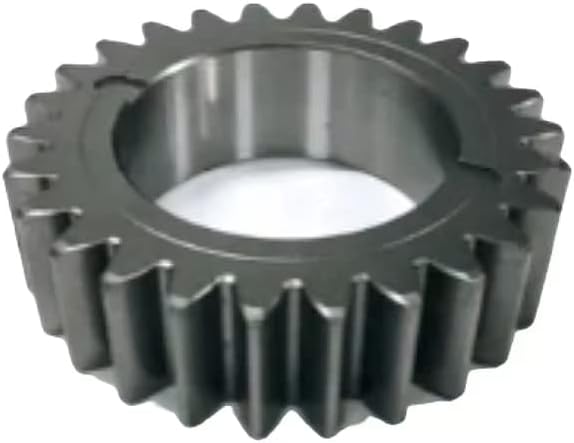
Sun gears are widely used in various automotive applications, playing crucial roles in different systems. Let’s explore the automotive applications where sun gears are commonly employed:
- Automatic Transmissions:
Sun gears are integral components of automatic transmissions in vehicles. Automatic transmissions use planetary gear systems, where the sun gear is one of the key elements. The interaction between the sun gear, planet gears, and ring gear allows for different gear ratios and smooth shifting between gears.
In automatic transmissions, the sun gear is driven by the engine’s input shaft and transmits power to the other gears. By controlling the engagement of various clutches and brakes within the transmission, the sun gear enables seamless gear changes, optimizing vehicle performance and fuel efficiency.
- Transfer Cases:
In four-wheel-drive and all-wheel-drive vehicles, transfer cases distribute power between the front and rear wheels. Sun gears are utilized in transfer cases to facilitate power transfer and gear reduction.
The sun gear, along with other gears and components, helps control the torque distribution and gear ratios between the front and rear axles. This allows vehicles to adapt to different driving conditions, such as slippery surfaces or off-road terrain, enhancing traction and stability.
- Starter Motors:
Sun gears are employed in starter motors, which are responsible for cranking the engine during startup. Starter motors use a gear reduction mechanism to convert the electric motor’s high-speed rotation into a higher torque output.
The sun gear, along with other gears like the planetary gears, enables the gear reduction necessary to generate sufficient torque to crank the engine. This gearing arrangement allows for efficient and reliable engine starting, even in challenging conditions.
- Power Seats and Windows:
Sun gears can also be found in power seat and power window mechanisms in vehicles. These systems use electric motors to adjust seat positions or operate windows.
The sun gear, along with other gears and mechanisms, converts the rotational motion of the electric motor into linear movement, enabling precise adjustments of seat positions or smooth operation of windows. The use of sun gears ensures reliable and efficient functionality of these systems.
- Other Automotive Systems:
Sun gears may also have applications in other automotive systems. For example, they can be found in power steering systems, where they contribute to the gear reduction and power transmission required for smooth steering operation.
Furthermore, sun gears can be utilized in various auxiliary systems, such as cooling fans, HVAC (heating, ventilation, and air conditioning) systems, and engine accessories. These applications leverage the sun gear’s ability to facilitate power transmission and gear reduction, enhancing the efficiency and performance of these systems.
In summary, sun gears are extensively used in automotive applications, including automatic transmissions, transfer cases, starter motors, power seats and windows, power steering systems, and auxiliary systems. Their presence in these systems enables crucial functions such as gear shifting, power distribution, gear reduction, and efficient power transmission. Sun gears contribute to the overall performance, reliability, and functionality of automotive systems, enhancing the driving experience and vehicle efficiency.
What is the role of a sun gear in the operation of a differential gear system?
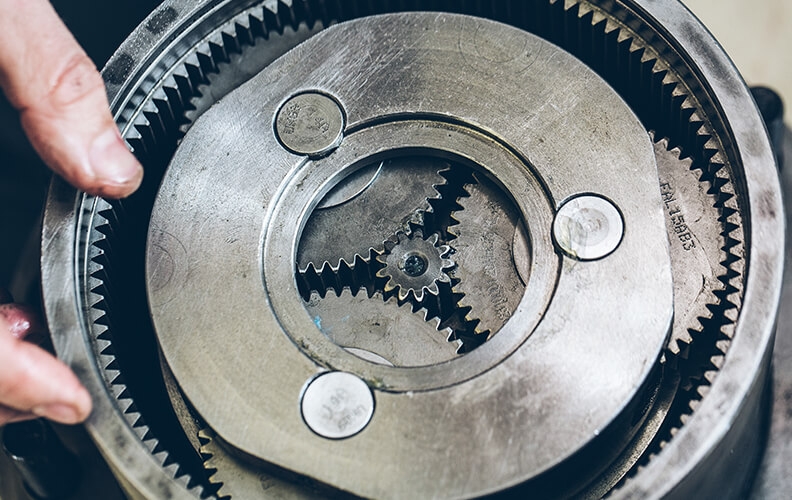
The sun gear plays a vital role in the operation of a differential gear system, which is commonly used in vehicles to distribute power between the wheels while allowing them to rotate at different speeds. The sun gear, along with other gears in the differential, contributes to the smooth and efficient operation of the system. Here’s an explanation of the role of a sun gear in the operation of a differential gear system:
- Power Input:
The sun gear serves as the input for the differential gear system. It receives torque from the driveshaft or propeller shaft, which transfers power from the engine or transmission to the differential. The rotation of the sun gear initiates the power flow within the differential assembly.
- Speed Differentiation:
The primary function of the differential gear system is to allow the wheels to rotate at different speeds while distributing power between them. The sun gear, along with the other gears in the differential, enables this speed differentiation.
As the sun gear rotates, it meshes with the planet gears, which are arranged around it. The planet gears, in turn, engage with the ring gear, which is connected to the axle shafts leading to the wheels. The interaction between the sun gear, planet gears, and ring gear allows the differential to accommodate different rotational speeds of the wheels.
- Distribution of Torque:
Another critical role of the sun gear is to distribute torque between the wheels in a differential system. The torque input from the sun gear is transmitted to the planet gears, which then transfer the torque to the ring gear and, subsequently, to the axle shafts and wheels.
As the differential operates, it adjusts the distribution of torque based on the traction and resistance encountered by each wheel. If one wheel experiences less resistance or has more traction than the other, the differential will allocate more torque to that wheel. This torque distribution helps optimize power delivery, improve traction, and enhance vehicle stability during cornering or uneven road conditions.
- Equal Torque Split (Open Differential):
In an open differential system, which is the most common type, the sun gear plays a role in equal torque split between the wheels under normal driving conditions. When both wheels have equal traction and resistance, the sun gear distributes torque equally to the planet gears, resulting in an equal torque split between the wheels.
However, in situations where one wheel loses traction or encounters less resistance, such as during wheel slip or when one wheel is on a slippery surface, the open differential will prioritize torque delivery to the wheel with less traction, potentially reducing overall traction and performance.
- Limited-Slip Differential:
In some differential systems, such as limited-slip differentials (LSDs), the sun gear’s role is modified to provide improved traction and torque distribution. LSDs use various mechanisms, such as clutch packs or viscous fluids, to limit the speed differentiation between the wheels and redirect torque to the wheel with more traction.
In LSDs, the sun gear’s engagement with the other gears is modified to allow for controlled torque transfer, enhancing traction and stability during challenging driving conditions.
In summary, the sun gear in a differential gear system serves as the power input and enables speed differentiation and torque distribution between the wheels. Its role is crucial for ensuring smooth power delivery, optimizing traction, and enhancing vehicle stability in various driving conditions.
What is the purpose of using a sun gear in mechanical applications?
The use of a sun gear in mechanical applications serves several important purposes. This central gear component plays a crucial role in achieving specific functionalities and benefits within gear systems. Here’s an explanation of the purpose of using a sun gear:
- Power Transmission: The primary purpose of a sun gear is to facilitate power transmission within gear systems. It acts as a central driver that receives power input, typically from an external source such as an engine or motor. The sun gear transfers torque to other gears, enabling the transmission of rotational motion and power throughout the system.
- Gear Ratio Control: Sun gears are instrumental in controlling the gear ratio within a gear system. By altering the size, number of teeth, and interaction with other gears such as planet gears and ring gears, the sun gear helps determine the overall gear ratio. This allows for the adjustment of rotational speed and torque output according to the specific requirements of the mechanical application.
- Torque Multiplication: In certain gear systems, a sun gear can be used to multiply torque. By employing a planetary gear arrangement, where the sun gear interacts with multiple planet gears and an outer ring gear, torque can be amplified. This torque multiplication capability of the sun gear is particularly useful in applications where high torque output is required, such as automotive transmissions and heavy machinery.
- Directional Control: Sun gears can also play a role in controlling the direction of power transmission within gear systems. In planetary gear arrangements, fixing or holding the sun gear while the ring gear or planet carrier is driven can result in different output directions, such as forward or reverse rotation. This directional control feature adds versatility to gear systems, allowing them to be utilized in various mechanical applications.
- Compact Design: The utilization of a sun gear in gear systems often enables a more compact and space-efficient design. The central positioning of the sun gear, along with the arrangement of other gears, allows for a reduction in overall size while maintaining efficient power transmission. This compactness is advantageous in applications with limited space or weight restrictions.
In summary, the purpose of using a sun gear in mechanical applications is to facilitate power transmission, control gear ratios, provide torque multiplication, offer directional control, and enable compact designs. The specific application and requirements of a mechanical system determine the selection and utilization of sun gears, ensuring efficient and reliable operation in various industries such as automotive, aerospace, industrial machinery, and more.
editor by CX 2023-10-07
China Good quality 3463500654 3463540216 3553540162 3553540216 4943540074 Wheel Rim Redutction Hub Sun Gear Semi Shaft Gear for Beiben Truck Spare Parts North Benz Beifang raw gear
Product Description
Product Description
wheel rim redutction hub sun gear semi shaft gear for beiben truck
inner 40 teeth outer 16 teeth
PART NUMBER:
34635 12JSD160T-17571 8JS130T-1701180S 8JS130T-1701180S 12JS160T-1701170S 12JS160T-1701170 12JS160T-175710 12JST-175712 QH70 QH70C 34635 494354 346356 0571 55714571 AZ998132 0571 AZ812W35108-0078 810W35609-0013 710W35108-0083 WG710W35106-0057 AZ710-35617-6005 AZAZ812W35106-0055 WG711W35610-0041 712-35610-0140 WG712W35111-0043 712W35111-0443 712W35113-0073 712W35113-571 712W35114-0174 AZ9231340329
Detailed Photos
OUR COMPANY SPEXIHU (WEST LAKE) DIS.ZE IN DEAL WITH ALL KINDS OF FAST GEARBOX SPARE PARTS.
SUCH AS GEAR,GEARBOX ASSY,PTO,SHAFT KEY AND SO ON
IF YOU DEMAND OR ARE INTERESTED IN OUR PRODUCTS,PLEASE DO NOT HESISTATE TO CONTACT WITH ME,
YOU CAN SUPPLY THE PART NUMBER OR PICTURES,OR FAST GEARBOX STEEL PLATE,THEN WE CAN CHECK TO GET THE ITEMS YOU DEMAND.
WISH WE CAN COOPERATE IN THE FUTURE
Packaging & Shipping
1. Packaging details: carton and wooden box packaging,woven bag,brown box, or
according to customer requirements.
2. Delivery Period: 7-30 working days after
receiving 30% deposit byTT
3. Port: HangZhou Port,China.
4. Transport: By sea, by
air,DHL,FEDEX,UPS,TNT,
FAQ
1.Q:About the payment term.
A: We can accept TT,LC,PAYPAL,WESTERNUION,and so on
2.Q:About the Quality and price
A: We supply good quality products to all our customers,give the competitive price.
3.Q:About the warranty period
A:At least half year, some parts are even longer.
4. Q:How to make order ?
A:Customer can contact us online,or send email with detail inquiry list,then we can reply soon
5.Q:About the discount
A:If the quantity large,we will give resonalbe discount.And for long time cooperation customer,we can give credit support
| Type: | Gearbox Welding Shaft |
|---|---|
| Delivery: | 3-10days |
| Model: | 3463500654 3463540216 3553540162 3553540216 |
| Application: | Beiben Truck |
| Package: | Standard Export Package |
| Quality: | Good Quality |
How does a sun gear contribute to changes in torque direction in gear systems?
A sun gear plays a crucial role in gear systems when it comes to changing the direction of torque. Let’s delve into the details of how a sun gear contributes to torque direction changes in gear systems:
- Planetary Gear Systems:
In planetary gear systems, the sun gear is one of the primary components along with the planet gears and the ring gear. These systems consist of one or more planet gears that mesh with both the sun gear and the ring gear. The arrangement of these gears allows for various torque direction changes.
- Torque Transmission:
The sun gear acts as a central driver in a planetary gear system. As power is applied to the sun gear, it transmits torque to the planet gears. The planet gears, in turn, engage with the ring gear, which ultimately transfers the torque to the output shaft or the desired component.
When the sun gear rotates in a specific direction, it imparts torque to the planet gears. The planet gears, due to their meshing with the stationary ring gear, distribute the torque evenly across all the gears. This torque transmission mechanism allows for the transfer of rotational force from the input (sun gear) to the output (ring gear or output shaft) of the system.
- Direction Reversal:
The unique configuration of a planetary gear system allows for torque direction changes. By manipulating the relative sizes and arrangements of the gears, including the sun gear, it is possible to reverse the direction of the torque output.
For instance, when the sun gear serves as the input and rotates clockwise, it causes the planet gears to rotate counterclockwise. This counterclockwise rotation, in turn, causes the ring gear to rotate in the clockwise direction, resulting in a torque reversal.
Similarly, by reversing the direction of the sun gear’s rotation, the torque direction can be reversed once again. This ability to change the torque direction makes planetary gear systems versatile and applicable in various mechanical and automotive applications.
- Torque Amplification and Reduction:
Another way the sun gear contributes to torque direction changes is through torque amplification and reduction. By incorporating different gear ratios within the planetary gear system, it is possible to alter the torque output relative to the input.
A specific arrangement of gear sizes, including the sun gear, can result in torque amplification. Torque amplification occurs when the output torque is greater than the input torque. This configuration can be beneficial in applications where increased torque is required, such as in heavy machinery or vehicles.
Conversely, torque reduction can be achieved by utilizing different gear ratios. By adjusting the sizes of the gears, including the sun gear, the output torque can be lower than the input torque. Torque reduction is useful in situations where precision control or lower torque output is necessary, such as in robotics or delicate machinery.
- Overall Torque Control:
The sun gear’s contribution to torque direction changes in gear systems provides a means of overall torque control. By manipulating the rotation direction and gear ratios, the torque can be directed, amplified, or reduced according to the specific requirements of the application.
Engineers and designers can utilize the sun gear, along with other gears in the system, to achieve the desired torque direction, torque amplification or reduction, and mechanical power transmission within gear systems.
In conclusion, the sun gear is a critical component in gear systems for changing torque direction. It enables torque transmission, facilitates torque direction reversal, contributes to torque amplification or reduction, and provides overall torque control within planetary gear systems and other similar gear configurations.
Can you explain the function of a sun gear in automatic transmissions?
The sun gear plays a crucial role in the operation of automatic transmissions. It is an essential component within the planetary gear set, which is responsible for transmitting power and controlling gear ratios in automatic transmissions. Here’s an explanation of the function of a sun gear in automatic transmissions:
- Power Input:
The sun gear serves as one of the primary power input sources in an automatic transmission. It connects to the torque converter, which is a fluid coupling that transfers engine power to the transmission. The rotation of the sun gear receives torque from the engine and acts as the initial input for the gear set.
- Gear Ratio Control:
The sun gear, along with other gears in the planetary gear set, allows for the control of gear ratios in an automatic transmission. By varying the engagement and rotation of the sun gear, different gear ratios can be achieved, providing the desired combination of torque multiplication and speed reduction or increase.
The gear ratio control is achieved through the interaction between the sun gear, planet gears, and ring gear. The sun gear is connected to the planet gears, which in turn mesh with the ring gear. The arrangement and rotation of these gears determine the gear ratio and, consequently, the output speed and torque of the transmission.
- Forward and Reverse Operation:
The sun gear’s function also extends to enabling both forward and reverse operation in automatic transmissions. By controlling the engagement of the sun gear with other gears in the planetary set, the transmission can switch between forward and reverse directions.
In the forward operation, the sun gear engages with the planet gears and the ring gear, transmitting power from the input shaft to the output shaft with a specific gear ratio. In the reverse operation, the sun gear engages with a different set of gears, causing the rotation of the output shaft to reverse its direction.
- Torque Multiplication:
Another important function of the sun gear is torque multiplication. By utilizing the planetary gear set arrangement, the sun gear can multiply or reduce torque depending on the gear ratio configuration. This torque multiplication capability allows the transmission to provide higher torque output when needed, such as during acceleration or climbing steep gradients.
- Gear Shifts:
The sun gear’s function also contributes to smooth and efficient gear shifts in automatic transmissions. As gear shifts occur, the transmission control unit adjusts the engagement of the sun gear, planet gears, and ring gear to achieve the desired gear ratio for the target speed and load conditions.
During gear shifts, the engagement of clutches or bands controlled by the transmission control unit ensures that the sun gear rotates with the desired set of gears, allowing for seamless transitions between different gear ratios. This coordinated operation of the sun gear and other gears facilitates smooth acceleration and deceleration without excessively straining the transmission components.
In summary, the sun gear in automatic transmissions serves multiple functions, including power input from the torque converter, gear ratio control through its engagement with other gears, enabling forward and reverse operation, torque multiplication for increased output, and contributing to smooth gear shifts. These functions collectively allow automatic transmissions to provide efficient power transfer, dynamic gear ratios, and smooth operation in various driving conditions.
How does a sun gear differ from other types of gears?
A sun gear has distinct characteristics that set it apart from other types of gears. While gears serve various purposes in mechanical systems, understanding the specific features of a sun gear can help differentiate it from other gear types. Here’s an explanation of how a sun gear differs from other gears:
- Central Position: Unlike many other gears that are located on the periphery of a gear system, a sun gear is positioned at the center of a planetary gear arrangement. It serves as a central driver within the system, transmitting torque to other gears.
- Engagement with Planet Gears: A defining feature of a sun gear is its engagement with multiple planet gears. These planet gears surround the sun gear and mesh with both the sun gear and an outer ring gear. The interaction between the sun gear and the planet gears allows for the transfer of torque and power distribution within the gear system.
- Gear System Configuration: Sun gears are commonly found in planetary gear systems, where they function as a central component. Planetary gear systems consist of a sun gear, planet gears, and an outer ring gear. The arrangement and interaction of these gears enable various gear ratios, torque multiplication, and directional control.
- Power Input: In a planetary gear system, the sun gear typically receives power input from an external source, such as an engine or motor. It serves as the primary driving element that initiates torque transmission and power distribution within the system.
- Role in Gear Ratio: The sun gear’s size, number of teeth, and its interaction with the planet gears and ring gear determine the overall gear ratio. By altering the sizes and arrangements of these gears, manufacturers can achieve different speed and torque combinations, providing versatility in gear system applications.
While a sun gear has its unique characteristics, it is essential to note that gears come in various types and configurations, each serving specific purposes in mechanical systems. Different types of gears include spur gears, helical gears, bevel gears, worm gears, and more. Each type has its own design, tooth profile, and applications, catering to different needs such as speed reduction, torque multiplication, directional control, or noise reduction.
In summary, a sun gear differentiates itself through its central positioning, engagement with planet gears, configuration in planetary gear systems, role as a power input element, and influence on gear ratio. Understanding these distinctions helps in recognizing the specific functions and applications of sun gears within mechanical systems.
editor by CX 2023-09-28
China OEM 3463500654 3463540216 3553540162 3553540216 4943540074 Wheel Rim Redutction Hub Sun Gear Semi Shaft Gear for Beiben Truck Spare Parts North Benz Beifang raw gear
Product Description
Product Description
wheel rim redutction hub sun gear semi shaft gear for beiben truck
inner 40 teeth outer 16 teeth
PART NUMBER:
34635 12JSD160T-17571 8JS130T-1701180S 8JS130T-1701180S 12JS160T-1701170S 12JS160T-1701170 12JS160T-175710 12JST-175712 QH70 QH70C 34635 494354 346356 0571 55714571 AZ998132 0571 AZ812W35108-0078 810W35609-0013 710W35108-0083 WG710W35106-0057 AZ710-35617-6005 AZAZ812W35106-0055 WG711W35610-0041 712-35610-0140 WG712W35111-0043 712W35111-0443 712W35113-0073 712W35113-571 712W35114-0174 AZ9231340329
Detailed Photos
OUR COMPANY SPEXIHU (WEST LAKE) DIS.ZE IN DEAL WITH ALL KINDS OF FAST GEARBOX SPARE PARTS.
SUCH AS GEAR,GEARBOX ASSY,PTO,SHAFT KEY AND SO ON
IF YOU DEMAND OR ARE INTERESTED IN OUR PRODUCTS,PLEASE DO NOT HESISTATE TO CONTACT WITH ME,
YOU CAN SUPPLY THE PART NUMBER OR PICTURES,OR FAST GEARBOX STEEL PLATE,THEN WE CAN CHECK TO GET THE ITEMS YOU DEMAND.
WISH WE CAN COOPERATE IN THE FUTURE
Packaging & Shipping
1. Packaging details: carton and wooden box packaging,woven bag,brown box, or
according to customer requirements.
2. Delivery Period: 7-30 working days after
receiving 30% deposit byTT
3. Port: HangZhou Port,China.
4. Transport: By sea, by
air,DHL,FEDEX,UPS,TNT,
FAQ
1.Q:About the payment term.
A: We can accept TT,LC,PAYPAL,WESTERNUION,and so on
2.Q:About the Quality and price
A: We supply good quality products to all our customers,give the competitive price.
3.Q:About the warranty period
A:At least half year, some parts are even longer.
4. Q:How to make order ?
A:Customer can contact us online,or send email with detail inquiry list,then we can reply soon
5.Q:About the discount
A:If the quantity large,we will give resonalbe discount.And for long time cooperation customer,we can give credit support
| Type: | Gearbox Welding Shaft |
|---|---|
| Delivery: | 3-10days |
| Model: | 3463500654 3463540216 3553540162 3553540216 |
| Application: | Beiben Truck |
| Package: | Standard Export Package |
| Quality: | Good Quality |
Can sun gears be used in renewable energy systems?
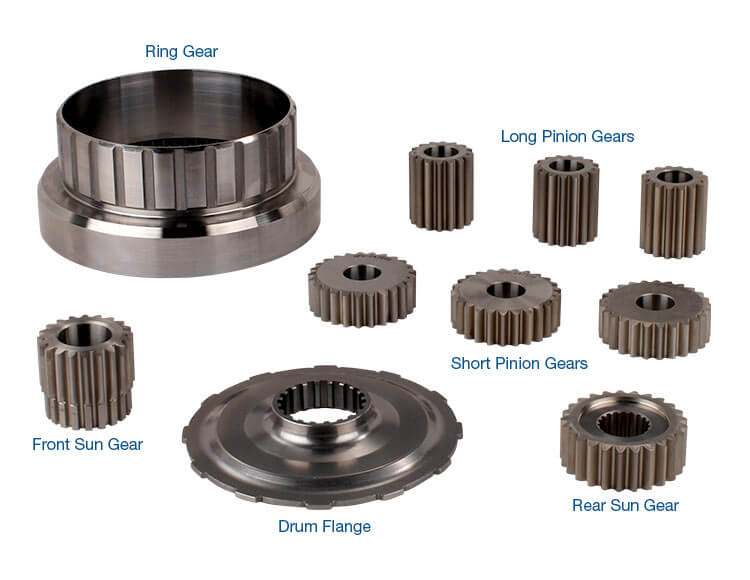
Sun gears can indeed be used in renewable energy systems, particularly in applications that involve the conversion and transmission of mechanical power. Let’s explore how sun gears can be utilized in different types of renewable energy systems:
- Wind Turbines:
In wind turbines, sun gears can be employed as part of the gearbox mechanism. The gearbox is responsible for increasing the rotational speed of the wind turbine’s rotor to generate electricity efficiently. Sun gears, along with other gears such as planet gears and ring gears, can be used to achieve the desired gear ratios and torque amplification. By leveraging sun gears, wind turbines can convert the relatively low rotational speed of the rotor into the higher rotational speed required by the generator, which produces electricity.
- Solar Tracking Systems:
Sun gears can also play a role in solar tracking systems, which are used to maximize the energy generation of solar panels by orienting them towards the sun throughout the day. These systems often utilize gears to control the movement of the solar panels. Sun gears can be incorporated into the gear mechanism to enable precise tracking and adjustment of the solar panels’ position, ensuring optimal sunlight exposure and energy capture.
- Hydroelectric Power Plants:
In hydroelectric power plants, sun gears can be employed in the turbine and generator systems. These systems use the force of flowing or falling water to drive turbines, which, in turn, generate electricity. Sun gears can be part of the turbine’s gearbox, enabling the efficient conversion of the low-speed rotation of the turbine into the high-speed rotation required by the generator. By utilizing sun gears, hydroelectric power plants can enhance the power generation capabilities of the turbines.
- Wave and Tidal Energy Converters:
Wave and tidal energy converters harness the power of ocean waves and tides to generate electricity. Sun gears can be utilized in the transmission systems of these converters. They can help convert the slow, oscillating motion of the waves or tides into a higher rotational speed suitable for driving generators. By incorporating sun gears, these converters can optimize the energy extraction process and improve the efficiency of power generation.
- Geothermal Power Plants:
In geothermal power plants, sun gears can be used in various components of the energy conversion process. Geothermal power plants extract heat from the Earth’s interior to generate electricity. Sun gears can be employed in systems such as turbines and generators, where they facilitate the conversion of thermal energy into mechanical and electrical energy. By utilizing sun gears, geothermal power plants can enhance the efficiency and performance of the energy conversion systems.
In summary, sun gears can find applications in renewable energy systems such as wind turbines, solar tracking systems, hydroelectric power plants, wave and tidal energy converters, and geothermal power plants. By leveraging the functionality of sun gears, these systems can optimize power generation, increase efficiency, and contribute to the sustainable utilization of renewable energy sources.
How does a sun gear handle variations in load and speed conditions?
A sun gear is designed to handle variations in load and speed conditions in mechanical systems. Its unique positioning and interaction within a planetary gear arrangement contribute to its ability to adapt to changing load and speed requirements. Here’s an explanation of how a sun gear handles variations in load and speed conditions:
- Load Distribution:
In a planetary gear system, the sun gear is located at the center and engages with multiple planet gears, which in turn interact with the outer ring gear. This configuration enables the sun gear to distribute the load among the planet gears. As the load on the system varies, the distribution of load among the planet gears adjusts accordingly. The load distribution mechanism allows the sun gear to handle variations in load conditions by effectively sharing the load across multiple contact points.
- Torque Amplification:
The arrangement of the sun gear, planet gears, and ring gear in a planetary system allows for torque amplification. By changing the number of teeth on the gears and their relative sizes, the gear ratio can be customized. This capability enables the sun gear to adapt to variations in load and speed conditions. When higher torque is required, the gear system can be configured to provide torque amplification by increasing the gear ratio. Conversely, when lower torque is needed, the gear ratio can be adjusted accordingly. This flexibility in gear ratio configuration allows the sun gear to handle variations in load and speed by adapting the torque output.
- Speed Regulation:
Another way the sun gear handles variations in load and speed conditions is through speed regulation. In a planetary gear system, the sun gear’s rotation speed is determined by the input speed and the gear ratio configuration. By adjusting the gear ratio, the rotational speed of the sun gear can be controlled. This speed regulation capability allows the sun gear to adapt to changing speed requirements. When higher speeds are necessary, the gear ratio can be adjusted to increase the rotational speed of the sun gear. Similarly, when lower speeds are desired, the gear ratio can be modified accordingly. The sun gear’s ability to regulate its rotational speed enables it to accommodate variations in load and speed conditions.
- Sturdy Construction:
Sun gears are typically constructed from durable materials such as hardened steel or other high-strength alloys. This robust construction enables them to withstand the forces generated by variations in load and speed conditions. The sturdy design of sun gears ensures that they can handle the stresses and strains associated with changing operating conditions without experiencing premature wear or failure.
In summary, a sun gear handles variations in load and speed conditions through load distribution among the planet gears, torque amplification or reduction based on the gear ratio configuration, speed regulation by adjusting the gear ratio, and its sturdy construction. These features enable the sun gear to adapt to changing requirements, ensuring reliable and efficient operation in various mechanical systems.
How does a sun gear affect the overall gear ratio in a system?
The presence and characteristics of a sun gear play a significant role in determining the overall gear ratio in a system. Understanding how the sun gear affects the gear ratio helps in analyzing and designing gear systems with the desired performance. Here’s an explanation of how a sun gear affects the overall gear ratio in a system:
- Number of Teeth: The number of teeth on the sun gear influences the gear ratio. In a simple gear system, where the sun gear engages with a single gear, the gear ratio is determined by the ratio of the number of teeth on the two gears. For example, if the sun gear has 10 teeth and the other gear has 30 teeth, the gear ratio would be 1:3, meaning the output gear rotates three times slower than the sun gear.
- Arrangement with Other Gears: In more complex gear systems, such as planetary gear configurations, the arrangement of the sun gear with other gears further influences the gear ratio. In a planetary gear set, the sun gear engages with multiple planet gears and an outer ring gear. By manipulating the sizes and arrangements of these gears, a wide range of gear ratios can be achieved. For instance, if the sun gear is fixed, the ring gear becomes the output and the gear ratio is determined by the relative sizes of the sun gear, planet gears, and ring gear.
- Planet Gears: The number of planet gears in a planetary gear system also affects the gear ratio. Increasing or decreasing the number of planet gears alters the gear ratio by changing the load distribution and the interaction between the sun gear and the ring gear. More planet gears generally result in a higher gear ratio, while fewer planet gears tend to reduce the gear ratio.
- Epicyclic Gear Trains: The arrangement of gears in an epicyclic gear train, which includes the sun gear, planet gears, and ring gear, allows for even more complex gear ratios. By fixing or holding certain gears while others are driven, various gear ratios can be achieved. For example, fixing the ring gear and driving the sun gear produces a different gear ratio compared to fixing the sun gear and driving the ring gear.
- Variable Gear Ratio: In some systems, the gear ratio can be varied by changing the position or speed of the sun gear. This can be achieved using mechanisms such as adjustable clutches or continuously variable transmissions (CVTs). By modifying the engagement between the sun gear and other gears, the gear ratio can be adjusted to optimize performance for different operating conditions.
In summary, the presence and characteristics of a sun gear, including the number of teeth, its arrangement with other gears, the presence of planet gears, and the overall gear system configuration, all contribute to the determination of the gear ratio. Understanding these factors allows for the design and control of gear systems with specific gear ratios to meet the requirements of various mechanical applications.
editor by CX 2023-09-28
China Best Sales Spur Drive Transmission Sun and Planetary Gear for CNC Machinery wholesaler
Product Description
Company Profile
HangZhou Xihu (West Lake) Dis. Mechanical Transmission Parts Co., Ltd. is a professional manufacturer of mechanical transmission parts, founded in 1987. Our company is committed to standard roller sprocket, single row and multi-row sprocket, non-standard sprocket, gear, rack, bevel gear, sprocket, shaft, gear shaft and other products. We have passed ISO 9001 .Xihu (West Lake) Dis. company has a number of experienced engineers, involved in plHangZhou, testing, heat treatment, inspection, the use of strict and accurate testing methods. Our sprockets are widely used in agricultural machinery, stereoscopic garage, mining equipment, woodworking machinery, petroleum machinery and other industries. Implementation standards such as ANSI.BS, DIN.KANA, etc., can also be customized according to the drawing processing
Our products have won wide praise and trust from customers for their excellent quality. HangZhou Xihu (West Lake) Dis. mechanical transmission Parts Co., Ltd. adhere to the quality of survival, innovation and development, customer first business philosophy, dedicated to domestic and foreign customers service. We warmly welcome you to negotiate business with us.
Product Description
| Standard or Nonstandard | Standard | Application | Maqchinery | |
| Hardness | Hardened Tooth Surface | Material | C45 | |
| Specification | Various Sprockets | Pitch(PCD) | 1-10M | |
| Toothed Portion Shape | Spur Gear | Teeth | 10-60Z | |
| HS Code | 84839000 | Production Capacity | 100000 Pcs/Year |
Detailed Photos
Certifications
FAQ
1. Are you manufacturer or trade company ?
We are a manufacturing factory founded in 1987 ,with trade team for international service.
2. What terms of payment you usually use ?
T/T . 30% deposit ,and 70% before finish production .Price :FOB ZheJiang .
3. Can you make products according to customer”s design ?
Yes , we can make according to customer”s drawing and samples .OED and ODM are acceptable.
4.How long is your delivery time ?
Genarally it is 5-15 days afte rthe deposit .It will take more days customized.
5. What do I need for offering a quote ?
Please offer us 2D or 3d drawing (with material ,dimension,surface treatment and other technical datas etc.), quantity ,or samples .
Then we will quote the best price .
|
Shipping Cost:
Estimated freight per unit. |
To be negotiated |
|---|
| Application: | Electric Cars, Motorcycle, Machinery, Marine, Agricultural Machinery, Car |
|---|---|
| Hardness: | Hardened Tooth Surface |
| Gear Position: | External Gear |
| Samples: |
US$ 0.1/Piece
1 Piece(Min.Order) | Order Sample free sample
|
|---|
| Customization: |
Available
| Customized Request |
|---|
How does a sun gear contribute to changes in torque direction in gear systems?
A sun gear plays a crucial role in gear systems when it comes to changing the direction of torque. Let’s delve into the details of how a sun gear contributes to torque direction changes in gear systems:
- Planetary Gear Systems:
In planetary gear systems, the sun gear is one of the primary components along with the planet gears and the ring gear. These systems consist of one or more planet gears that mesh with both the sun gear and the ring gear. The arrangement of these gears allows for various torque direction changes.
- Torque Transmission:
The sun gear acts as a central driver in a planetary gear system. As power is applied to the sun gear, it transmits torque to the planet gears. The planet gears, in turn, engage with the ring gear, which ultimately transfers the torque to the output shaft or the desired component.
When the sun gear rotates in a specific direction, it imparts torque to the planet gears. The planet gears, due to their meshing with the stationary ring gear, distribute the torque evenly across all the gears. This torque transmission mechanism allows for the transfer of rotational force from the input (sun gear) to the output (ring gear or output shaft) of the system.
- Direction Reversal:
The unique configuration of a planetary gear system allows for torque direction changes. By manipulating the relative sizes and arrangements of the gears, including the sun gear, it is possible to reverse the direction of the torque output.
For instance, when the sun gear serves as the input and rotates clockwise, it causes the planet gears to rotate counterclockwise. This counterclockwise rotation, in turn, causes the ring gear to rotate in the clockwise direction, resulting in a torque reversal.
Similarly, by reversing the direction of the sun gear’s rotation, the torque direction can be reversed once again. This ability to change the torque direction makes planetary gear systems versatile and applicable in various mechanical and automotive applications.
- Torque Amplification and Reduction:
Another way the sun gear contributes to torque direction changes is through torque amplification and reduction. By incorporating different gear ratios within the planetary gear system, it is possible to alter the torque output relative to the input.
A specific arrangement of gear sizes, including the sun gear, can result in torque amplification. Torque amplification occurs when the output torque is greater than the input torque. This configuration can be beneficial in applications where increased torque is required, such as in heavy machinery or vehicles.
Conversely, torque reduction can be achieved by utilizing different gear ratios. By adjusting the sizes of the gears, including the sun gear, the output torque can be lower than the input torque. Torque reduction is useful in situations where precision control or lower torque output is necessary, such as in robotics or delicate machinery.
- Overall Torque Control:
The sun gear’s contribution to torque direction changes in gear systems provides a means of overall torque control. By manipulating the rotation direction and gear ratios, the torque can be directed, amplified, or reduced according to the specific requirements of the application.
Engineers and designers can utilize the sun gear, along with other gears in the system, to achieve the desired torque direction, torque amplification or reduction, and mechanical power transmission within gear systems.
In conclusion, the sun gear is a critical component in gear systems for changing torque direction. It enables torque transmission, facilitates torque direction reversal, contributes to torque amplification or reduction, and provides overall torque control within planetary gear systems and other similar gear configurations.
How does a sun gear handle variations in load and speed conditions?
A sun gear is designed to handle variations in load and speed conditions in mechanical systems. Its unique positioning and interaction within a planetary gear arrangement contribute to its ability to adapt to changing load and speed requirements. Here’s an explanation of how a sun gear handles variations in load and speed conditions:
- Load Distribution:
In a planetary gear system, the sun gear is located at the center and engages with multiple planet gears, which in turn interact with the outer ring gear. This configuration enables the sun gear to distribute the load among the planet gears. As the load on the system varies, the distribution of load among the planet gears adjusts accordingly. The load distribution mechanism allows the sun gear to handle variations in load conditions by effectively sharing the load across multiple contact points.
- Torque Amplification:
The arrangement of the sun gear, planet gears, and ring gear in a planetary system allows for torque amplification. By changing the number of teeth on the gears and their relative sizes, the gear ratio can be customized. This capability enables the sun gear to adapt to variations in load and speed conditions. When higher torque is required, the gear system can be configured to provide torque amplification by increasing the gear ratio. Conversely, when lower torque is needed, the gear ratio can be adjusted accordingly. This flexibility in gear ratio configuration allows the sun gear to handle variations in load and speed by adapting the torque output.
- Speed Regulation:
Another way the sun gear handles variations in load and speed conditions is through speed regulation. In a planetary gear system, the sun gear’s rotation speed is determined by the input speed and the gear ratio configuration. By adjusting the gear ratio, the rotational speed of the sun gear can be controlled. This speed regulation capability allows the sun gear to adapt to changing speed requirements. When higher speeds are necessary, the gear ratio can be adjusted to increase the rotational speed of the sun gear. Similarly, when lower speeds are desired, the gear ratio can be modified accordingly. The sun gear’s ability to regulate its rotational speed enables it to accommodate variations in load and speed conditions.
- Sturdy Construction:
Sun gears are typically constructed from durable materials such as hardened steel or other high-strength alloys. This robust construction enables them to withstand the forces generated by variations in load and speed conditions. The sturdy design of sun gears ensures that they can handle the stresses and strains associated with changing operating conditions without experiencing premature wear or failure.
In summary, a sun gear handles variations in load and speed conditions through load distribution among the planet gears, torque amplification or reduction based on the gear ratio configuration, speed regulation by adjusting the gear ratio, and its sturdy construction. These features enable the sun gear to adapt to changing requirements, ensuring reliable and efficient operation in various mechanical systems.
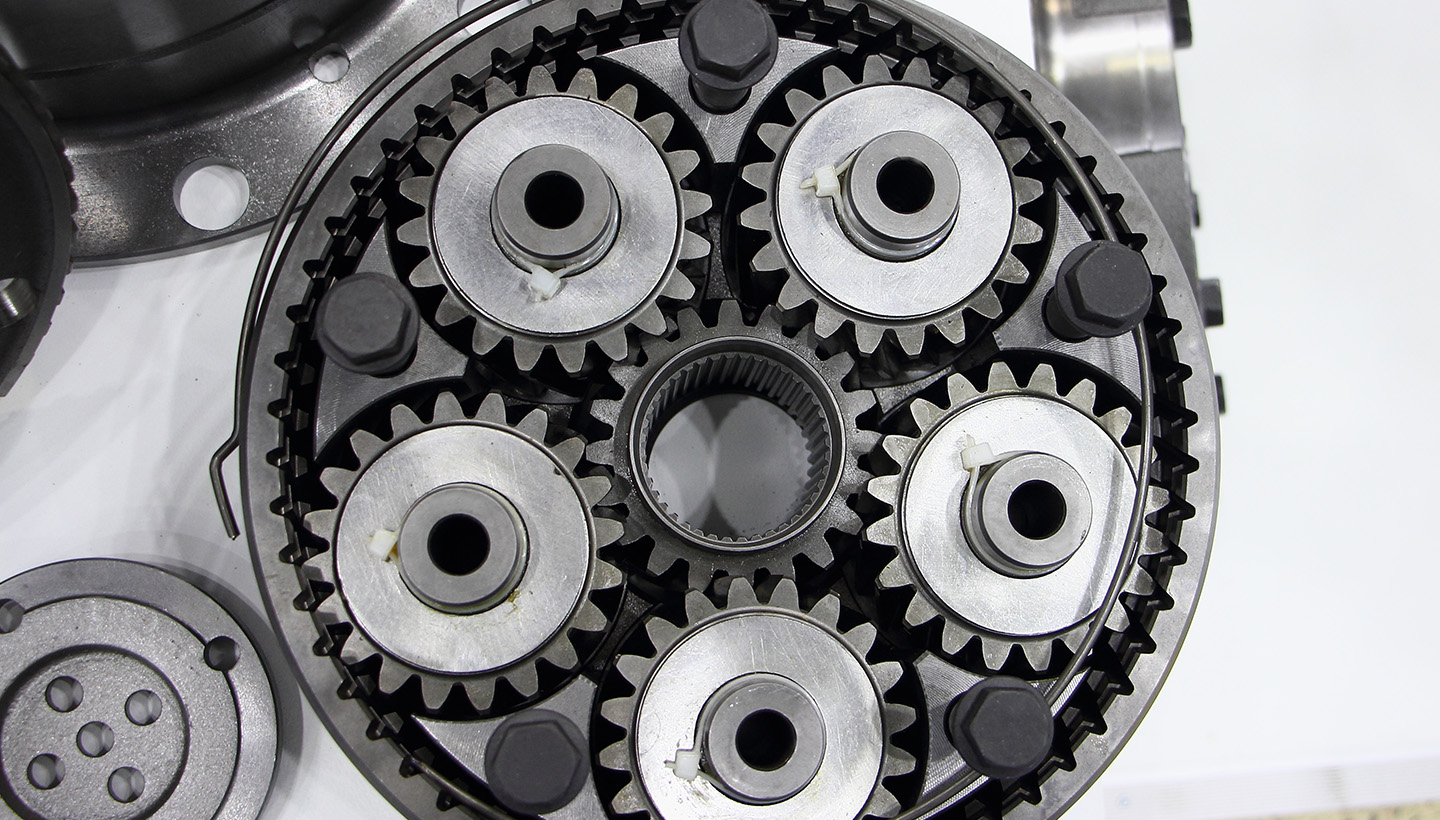
What is the significance of the positioning of the sun gear in planetary gear arrangements?
The positioning of the sun gear in planetary gear arrangements holds significant importance and directly impacts the functionality and performance of the gear system. Understanding the significance of sun gear positioning helps in comprehending how different configurations can be utilized to achieve specific objectives. Here’s an explanation of the significance of the positioning of the sun gear in planetary gear arrangements:
- Power Input: The sun gear serves as the primary power input element in a planetary gear arrangement. Its central position allows it to receive rotational motion and torque from an external source, such as an engine or motor. Being the input gear, the sun gear plays a crucial role in transmitting power to other gears within the system.
- Interaction with Planet Gears: The positioning of the sun gear at the center of a planetary gear arrangement enables its engagement with multiple planet gears. The planet gears, which are smaller gears surrounding the sun gear, mesh with both the sun gear and an outer ring gear. This interaction between the sun gear and planet gears facilitates the transfer of torque and motion between the gears.
- Torque Distribution: As the sun gear rotates, it transmits torque to the planet gears through their meshing teeth. The planet gears, in turn, transfer the torque to the outer ring gear. The positioning of the sun gear, along with the arrangement of the planet gears and ring gear, allows for torque distribution among the gears. This torque distribution mechanism enables efficient load sharing and prevents excessive stress on any single gear, enhancing the overall durability and performance of the gear system.
- Gear Ratio Control: The positioning of the sun gear in relation to the planet gears and the ring gear determines the gear ratio of the planetary gear arrangement. By changing the arrangement and sizes of these gears, different gear ratios can be achieved. The number of teeth on the sun gear, planet gears, and ring gear, as well as their relative sizes, play a crucial role in determining the gear ratio. This flexibility in gear ratio control allows for the customization of output speeds and torque levels to suit specific application requirements.
- Torque Amplification: The positioning of the sun gear in a planetary gear arrangement enables torque amplification. By utilizing the interaction between the sun gear, planet gears, and ring gear, the gear system can multiply or reduce torque based on the gear ratio configuration. This torque amplification feature is particularly advantageous in applications where high torque output is needed, such as automotive transmissions and heavy machinery.
- Directional Control: The positioning of the sun gear also contributes to the directional control capability of a planetary gear arrangement. By fixing or holding the sun gear while the ring gear or planet carrier is driven, the gear system can achieve different output directions, such as forward or reverse rotation. This directional control adds versatility to the gear system, allowing it to be used in various mechanical applications.
In summary, the positioning of the sun gear in planetary gear arrangements is significant for power input, interaction with planet gears, torque distribution, gear ratio control, torque amplification, and directional control. The central position of the sun gear enables efficient power transmission, load sharing, and customization of gear ratios, making planetary gear arrangements with a sun gear suitable for a wide range of mechanical applications.
editor by CX 2023-09-15
China Professional High-Quality Hydraulic System Spare Parts Sun Gear 735.0181-PMP7.5 for Concrete Mixer Truck gear cycle
Product Description
Heavy Duty Truck High-quality Hydraulic System Spare Parts Sun Gear 735.0181-PMP7.5 for Concrete Mixer Truck
Product Description
|
Part Name |
Sun Gear |
Brand Name |
|
|
Part Number |
735.0181-PMP7.5 |
Application |
Concrete Mixer Truck |
|
Mini Order |
One Set/ Piece |
Packing |
Carton,Wooden Box, Pallet |
|
Supply Ability |
10000 Pieces |
OEM |
Available |
|
Quality Standard |
100% Tested |
Quality Certification |
ISO,CCC,GSO,CE,SGS,TUV |
|
Condition |
New |
Payment Terms |
L/C, T/T, Western Union,Paypal |
|
Origin |
China |
Loading Port |
Any Port In China |
Detailed Photos
Company Profile
Company Information / About Us
ZheJiang CHINAMFG VEHICLE TRADING CO., LTD (HOKA VEHICLE hereafter in short) has been engaged in the heavy duty truck industry for more than 15 years. With the professional team and first class design and production experience and market capacity, CHINAMFG VEHICLE has exported and delivered more than 5,000 units heavy duty trucks to countries across Africa Middle East, Southeast Asia and South America.
HOKA VEHILCE maintains dealership and distribution authorization from manufacturer including SINOTRUK, SHACMAN, FOTON, CIMC, SHENGRUN, HELI, etc. Our main products range from Dump truck, Tractor Truck, Concrete Mixer, Truck Van, Truck Lorry Truck, Off-road Dump, Truck Tanker, Truck Mounted Cranes, trailer tanker, trailers and all other kinds of modified trucks.
HOKA VEHILCE, we transport your cargos, we deliver the world, we carry your dreams!
Why Choose Us
Worldwide Sales, Marketing and Service Network
During the past 15 years, we have exported over 5,000 units of different kinds of heavy duty trucks to over 50 countries in Africa, Middle East, Southeast Asia, and South America. Our overseas authorized truck dealers and service dealers are all around the world.
Wide Ranges of Various Modified Trucks with Different Applications
Our main products range from Dump Truck, Tractor Truck, Concrete Mixer Truck, Van Truck, Lorry Truck, Off-road Dump Truck, Tanker Truck, Truck Mounted Cranes, trailer, tanker trailers and all other kinds of modified trucks. We can design, produce and supply our customers with any special vehicle.
Flexible Payment Terms for Different Trucks and Business
Besides traditional payment terms such as TT, LC, we still offer our stable and long-term partners with various financial support and credit payment terms at different periods.
Excellent and Outstanding After Sales Service
Our professional technicians and mechanics and parts staff always concentrate all our products and our customers. Top Starting Point, High Quality and Worry-free Service is our promise to all our customers.
High Efficiency is One of Our Goal and Promise to Our Customers
We will be always with our customers whenever and wherever we are. All problems and questions shall be solved by our end at the first time. Customer priority outstands without any doubt.
Latest Truck Development and Trends Shall Be Delivered Regularly
We have abundant technical team, familiar with local and major exporter product standards. Our customers will be regularly updated with the latest truck development and trends in China and other countries.
Who we are?
The most professional truck and spare parts distributor in China;
The leading truck and spare parts exporter in China;
The most comprehensive truck and spare parts solution provider in China;
The most worry-free and most satisfactory and reputable supplier for you in China.
We will never let you down if you choose us.
Contact us:
Sales Manager: Lock Wu
| OEM: | Available |
|---|---|
| Stock: | Available |
| Min. Order Quantity: | 1 |
| Transport Package: | Carton |
| Origin: | China |
| Samples: |
US$ 42/Piece
1 Piece(Min.Order) | |
|---|
| Customization: |
Available
| Customized Request |
|---|
Can you describe the interaction between sun gears and planet gears?
The interaction between sun gears and planet gears is a fundamental aspect of gear systems. Let’s delve into the details of this interaction:
- Planetary Gear Systems:
The interaction between sun gears and planet gears primarily occurs in planetary gear systems. These systems consist of multiple planet gears that rotate around a central sun gear while meshing with an outer ring gear. This arrangement allows for various mechanical advantages and functionalities.
- Power Transmission:
The sun gear serves as the primary driver in a planetary gear system. When power is applied to the sun gear, it transmits rotational force to the planet gears. The planet gears, due to their meshing with both the sun gear and the ring gear, distribute the transmitted power evenly across all the gears.
As the sun gear rotates, the planet gears rotate in the opposite direction around the sun gear while also rotating around their own axes. This rotational movement of the planet gears, driven by the sun gear, plays a crucial role in power transmission within the gear system.
- Speed and Torque Ratios:
The interaction between the sun gear and planet gears affects the speed and torque ratios in a gear system. By choosing different sizes for the sun gear and planet gears, engineers can manipulate the gear ratios to achieve specific outcomes.
When the sun gear is larger than the planet gears, it results in a higher speed ratio. In this case, the sun gear rotates faster than the planet gears, leading to an output shaft or ring gear with increased rotational speed relative to the input shaft or sun gear.
Conversely, when the sun gear is smaller than the planet gears, it leads to a lower speed ratio. In this scenario, the sun gear rotates slower than the planet gears, resulting in an output shaft or ring gear with reduced rotational speed compared to the input shaft or sun gear.
Similarly, the interaction between the sun gear and planet gears affects the torque ratio. When the sun gear is larger than the planet gears, it amplifies the torque, resulting in higher output torque relative to the input torque. Conversely, when the sun gear is smaller, it reduces the torque, resulting in lower output torque compared to the input torque.
- Direction Reversal:
The interaction between the sun gear and planet gears also enables torque direction reversal in planetary gear systems. When the sun gear rotates in a specific direction, it imparts torque to the planet gears, causing them to rotate in the opposite direction around the sun gear.
This counterclockwise rotation of the planet gears, as driven by the sun gear, leads to the ring gear rotating in the opposite direction. By reversing the direction of the sun gear’s rotation, the torque direction can be reversed once again. This ability to change torque direction makes planetary gear systems versatile and applicable in various mechanical and automotive applications.
- Mechanical Advantages:
The interaction between sun gears and planet gears offers several mechanical advantages. The distribution of torque across multiple planet gears allows for increased load-bearing capacity and improved system reliability. As each planet gear shares the load, the overall stress on individual gears is reduced, enhancing the system’s durability.
Moreover, the arrangement of sun gears and planet gears in a planetary gear system results in compact designs and high power density. The distributed power transmission and torque-sharing characteristics enable the system to handle higher loads while occupying minimal space.
In summary, the interaction between sun gears and planet gears in planetary gear systems is crucial for power transmission, achieving speed and torque ratios, enabling torque direction reversal, and providing mechanical advantages such as load distribution and compact designs. Understanding this interaction is essential for designing and optimizing gear systems in various applications.
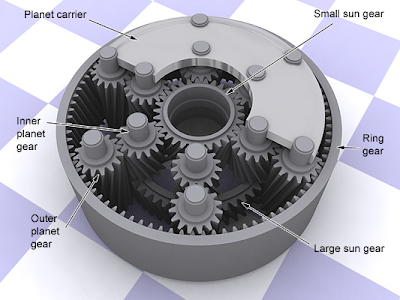
What are the considerations for lubrication and maintenance of sun gears?
Proper lubrication and maintenance of sun gears are crucial for ensuring their optimal performance, longevity, and reliability. Sun gears, like other mechanical components, require appropriate lubrication to minimize friction, reduce wear, and prevent damage. Here are some considerations for lubrication and maintenance of sun gears:
- Lubrication:
Effective lubrication is essential for sun gears to operate smoothly and efficiently. Consider the following aspects:
- Lubricant Selection: Choose a lubricant that is specifically designed for gear applications. The lubricant should have the necessary viscosity, additives, and thermal stability to provide adequate lubrication and protection to the sun gears under the operating conditions.
- Proper Lubricant Application: Ensure that the lubricant is applied correctly to the sun gears. This can involve methods such as oil baths, oil mist systems, or grease application, depending on the specific gear system and its requirements. Follow the manufacturer’s guidelines or consult with lubrication experts for the appropriate lubrication technique.
- Regular Lubricant Inspection: Monitor the lubricant condition regularly to ensure its effectiveness and to detect any signs of contamination, degradation, or insufficient lubrication. Perform oil analysis or visual inspections as recommended by lubrication experts or equipment manufacturers.
- Maintenance:
Proper maintenance practices help keep sun gears in optimal working condition and extend their service life. Consider the following maintenance considerations:
- Regular Inspections: Conduct routine inspections of the sun gears to check for any signs of wear, damage, misalignment, or abnormal operating conditions. Inspections can help identify potential issues early, allowing for timely maintenance or repairs.
- Torque and Load Monitoring: Keep track of the torque and load applied to the sun gears. Ensure that the gear system is not subjected to excessive loads or overloading, as this can lead to premature wear and failure. Use appropriate monitoring techniques, such as load sensors or torque meters, to ensure the gear system operates within its designed limits.
- Alignment and Gear Meshing: Ensure proper alignment and gear meshing between the sun gear, planet gears, and ring gear. Misalignment or improper gear engagement can cause excessive wear and damage to the gear system. Regularly check and adjust the gear alignment as needed.
- Proactive Repairs and Replacements: If any issues, such as worn teeth, damaged gear components, or abnormal vibrations, are detected during inspections or monitoring, take proactive measures to repair or replace the affected parts. Timely repairs can prevent further damage and improve the overall performance and reliability of the sun gears.
- Operating Conditions: Consider the operating conditions of the gear system, such as temperature, humidity, and environmental factors. Ensure that the sun gears are protected from excessive heat, moisture, contaminants, and corrosive substances that can adversely affect their performance and durability.
In summary, proper lubrication and maintenance of sun gears are critical for their optimal performance and longevity. Considerations include selecting the right lubricant, applying it correctly, inspecting the lubricant regularly, conducting routine inspections, monitoring torque and load, ensuring proper alignment and gear meshing, performing proactive repairs and replacements, and considering the operating conditions. Adhering to these considerations helps ensure reliable and efficient operation of sun gears in various mechanical systems.
What are the advantages of using a sun gear in a planetary gear set?
The utilization of a sun gear in a planetary gear set offers several advantages, contributing to the popularity and wide range of applications of this gear configuration. Understanding the specific benefits of using a sun gear helps in appreciating its advantages in mechanical systems. Here’s an explanation of the advantages of using a sun gear in a planetary gear set:
- Torque Amplification: One of the significant advantages of a planetary gear set with a sun gear is its ability to amplify torque. By arranging the sun gear, planet gears, and an outer ring gear, torque can be multiplied or reduced depending on the specific gear ratio configuration. This torque amplification feature is particularly useful in applications where high torque output is required, such as automotive transmissions and heavy machinery.
- Compact Design: Planetary gear sets with a sun gear often enable a more compact and space-efficient design. The central positioning of the sun gear, along with the arrangement of other gears, allows for a reduction in overall size while maintaining efficient power transmission. This compactness is advantageous in applications with limited space or weight restrictions, where a smaller and lighter gear system is desirable.
- High Gear Ratios: The presence of a sun gear in a planetary gear set facilitates the attainment of high gear ratios. By manipulating the sizes and arrangements of the sun gear, planet gears, and ring gear, a wide range of gear ratios can be achieved. This flexibility in gear ratio control enables planetary gear sets to provide various output speeds and torque levels, allowing for customization based on the specific requirements of the mechanical system.
- Load Distribution: The sun gear’s engagement with multiple planet gears in a planetary gear set allows for load distribution among the gears. This distributed load-sharing characteristic helps in reducing the load on individual gears, resulting in improved reliability and longevity of the gear system. It also enables efficient power distribution and helps prevent excessive wear and stress on any single gear within the system.
- Directional Control: Planetary gear sets with a sun gear provide versatile directional control. By fixing or holding the sun gear while the ring gear or planet carrier is driven, the gear system can achieve different output directions, such as forward or reverse rotation. This directional control feature adds flexibility to mechanical systems, allowing for a wide range of applications that require bidirectional power transmission.
- Multiple Output Shafts: Another advantage of using a sun gear in a planetary gear set is the possibility of having multiple output shafts. By incorporating additional planet gears and output shafts, a planetary gear set with a sun gear can deliver power to multiple outputs simultaneously. This feature is beneficial in applications that require power distribution to multiple subsystems or components within a complex mechanical system.
In summary, the advantages of using a sun gear in a planetary gear set include torque amplification, compact design, high gear ratios, load distribution, directional control, and the potential for multiple output shafts. These advantages make planetary gear sets with a sun gear well-suited for a wide range of applications, including automotive, aerospace, machinery, robotics, and more.
editor by CX 2023-09-14
China wholesaler Sun Gear 41A0003 for CZPT Wheel Loader Clg856 gear cycle
Product Description
Product Specification:
| Title | Sun gear 41A0003 for LiuGong wheel loader CLG856 |
| Part Name | Sun gear |
| Part No. | 41A0003 |
| Brand | LiuGong |
| Condition | Original/genuine parts |
| Net Weight | 2.5 KG |
| Packaging | Safety carton or wooden box |
| Delivery time | 2-5 working days |
Company Profile:
ZheJiang CHINAMFG Machinery Equipment Co., Ltd is 1 of the wholesaler, which specializes in providing LiuGong spare parts in China.
Our product range as following.
-
Parts for LiuGong wheel loader CLG835, ZL 30E, CLG842, ZL40B, ZL50C, ZL50CN, CLG856, CLG855, CLG862, CLG877 etc..
-
Parts for LiuGong excavator CLG205C, CLG915C, CLG916D, CLG920D/922D/923D/925D, CLG926LC etc..
-
Parts for LiuGong motor grader CLG414, CLG416, CLG418, CLG420.
-
Parts for LiuGong roller CLG612H, CLG614H, CLG618H, CLG614, CLG620 etc..
-
Parts for LiuGong compact wheel loader CLG816/816G, CLG820C, CLG836 etc..
-
Parts for LiuGong skid steer loader CLG365A, CLG375A
-
Parts for LiuGong backhoe loader CLG766, CLG777
-
Parts for LiuGong forklift CPC30, CPC35, CPCD30, CPCD 35 etc..
-
ZF transmission 4WG-200, 6WG-200, 4WG-180, 6WG-180.
-
PERMCO hydraulic pumps
We also have engine parts available for LiuGong machines. If you have any interest or enquiry of LiuGong parts, welcome to contact us.
Know more information, please visit to : http://liugongparts
Warehouse & spare parts pictures :
Packaging pictures
Our advantages & Services
1. Our company in the city where is liuGong factory/headquarter located, spare parts are taken from LiuGong warehouse directly.
2. Our company sell LiuGong genuine spare parts, complying with highest LiuGong performance standards.
3. Our company have own warehouse, which will guarantee you the high availability and short lead time (normal order 1-5 working days ).
4. Our team has rich experience in LiuGong spare parts.
5. Provide flexible pricing, offer discount and deferred payment for the wholesale buyers.
6. Accept payment by T/T and western union.
7. Accept terms of FOB, CIF, CPT ……etc.
If you want to know more infomation, please feel free to call or email us.
| After-sales Service: | Yes |
|---|---|
| Warranty: | Yes |
| Type: | Gear |
| Application: | Liugong Wheel Loader |
| Condition: | New |
| Stock: | in Stock |
Can you describe the interaction between sun gears and planet gears?
The interaction between sun gears and planet gears is a fundamental aspect of gear systems. Let’s delve into the details of this interaction:
- Planetary Gear Systems:
The interaction between sun gears and planet gears primarily occurs in planetary gear systems. These systems consist of multiple planet gears that rotate around a central sun gear while meshing with an outer ring gear. This arrangement allows for various mechanical advantages and functionalities.
- Power Transmission:
The sun gear serves as the primary driver in a planetary gear system. When power is applied to the sun gear, it transmits rotational force to the planet gears. The planet gears, due to their meshing with both the sun gear and the ring gear, distribute the transmitted power evenly across all the gears.
As the sun gear rotates, the planet gears rotate in the opposite direction around the sun gear while also rotating around their own axes. This rotational movement of the planet gears, driven by the sun gear, plays a crucial role in power transmission within the gear system.
- Speed and Torque Ratios:
The interaction between the sun gear and planet gears affects the speed and torque ratios in a gear system. By choosing different sizes for the sun gear and planet gears, engineers can manipulate the gear ratios to achieve specific outcomes.
When the sun gear is larger than the planet gears, it results in a higher speed ratio. In this case, the sun gear rotates faster than the planet gears, leading to an output shaft or ring gear with increased rotational speed relative to the input shaft or sun gear.
Conversely, when the sun gear is smaller than the planet gears, it leads to a lower speed ratio. In this scenario, the sun gear rotates slower than the planet gears, resulting in an output shaft or ring gear with reduced rotational speed compared to the input shaft or sun gear.
Similarly, the interaction between the sun gear and planet gears affects the torque ratio. When the sun gear is larger than the planet gears, it amplifies the torque, resulting in higher output torque relative to the input torque. Conversely, when the sun gear is smaller, it reduces the torque, resulting in lower output torque compared to the input torque.
- Direction Reversal:
The interaction between the sun gear and planet gears also enables torque direction reversal in planetary gear systems. When the sun gear rotates in a specific direction, it imparts torque to the planet gears, causing them to rotate in the opposite direction around the sun gear.
This counterclockwise rotation of the planet gears, as driven by the sun gear, leads to the ring gear rotating in the opposite direction. By reversing the direction of the sun gear’s rotation, the torque direction can be reversed once again. This ability to change torque direction makes planetary gear systems versatile and applicable in various mechanical and automotive applications.
- Mechanical Advantages:
The interaction between sun gears and planet gears offers several mechanical advantages. The distribution of torque across multiple planet gears allows for increased load-bearing capacity and improved system reliability. As each planet gear shares the load, the overall stress on individual gears is reduced, enhancing the system’s durability.
Moreover, the arrangement of sun gears and planet gears in a planetary gear system results in compact designs and high power density. The distributed power transmission and torque-sharing characteristics enable the system to handle higher loads while occupying minimal space.
In summary, the interaction between sun gears and planet gears in planetary gear systems is crucial for power transmission, achieving speed and torque ratios, enabling torque direction reversal, and providing mechanical advantages such as load distribution and compact designs. Understanding this interaction is essential for designing and optimizing gear systems in various applications.
Can you explain the function of a sun gear in automatic transmissions?
The sun gear plays a crucial role in the operation of automatic transmissions. It is an essential component within the planetary gear set, which is responsible for transmitting power and controlling gear ratios in automatic transmissions. Here’s an explanation of the function of a sun gear in automatic transmissions:
- Power Input:
The sun gear serves as one of the primary power input sources in an automatic transmission. It connects to the torque converter, which is a fluid coupling that transfers engine power to the transmission. The rotation of the sun gear receives torque from the engine and acts as the initial input for the gear set.
- Gear Ratio Control:
The sun gear, along with other gears in the planetary gear set, allows for the control of gear ratios in an automatic transmission. By varying the engagement and rotation of the sun gear, different gear ratios can be achieved, providing the desired combination of torque multiplication and speed reduction or increase.
The gear ratio control is achieved through the interaction between the sun gear, planet gears, and ring gear. The sun gear is connected to the planet gears, which in turn mesh with the ring gear. The arrangement and rotation of these gears determine the gear ratio and, consequently, the output speed and torque of the transmission.
- Forward and Reverse Operation:
The sun gear’s function also extends to enabling both forward and reverse operation in automatic transmissions. By controlling the engagement of the sun gear with other gears in the planetary set, the transmission can switch between forward and reverse directions.
In the forward operation, the sun gear engages with the planet gears and the ring gear, transmitting power from the input shaft to the output shaft with a specific gear ratio. In the reverse operation, the sun gear engages with a different set of gears, causing the rotation of the output shaft to reverse its direction.
- Torque Multiplication:
Another important function of the sun gear is torque multiplication. By utilizing the planetary gear set arrangement, the sun gear can multiply or reduce torque depending on the gear ratio configuration. This torque multiplication capability allows the transmission to provide higher torque output when needed, such as during acceleration or climbing steep gradients.
- Gear Shifts:
The sun gear’s function also contributes to smooth and efficient gear shifts in automatic transmissions. As gear shifts occur, the transmission control unit adjusts the engagement of the sun gear, planet gears, and ring gear to achieve the desired gear ratio for the target speed and load conditions.
During gear shifts, the engagement of clutches or bands controlled by the transmission control unit ensures that the sun gear rotates with the desired set of gears, allowing for seamless transitions between different gear ratios. This coordinated operation of the sun gear and other gears facilitates smooth acceleration and deceleration without excessively straining the transmission components.
In summary, the sun gear in automatic transmissions serves multiple functions, including power input from the torque converter, gear ratio control through its engagement with other gears, enabling forward and reverse operation, torque multiplication for increased output, and contributing to smooth gear shifts. These functions collectively allow automatic transmissions to provide efficient power transfer, dynamic gear ratios, and smooth operation in various driving conditions.
What is a sun gear and how does it function in gear systems?
A sun gear is a fundamental component in gear systems, particularly in planetary gear arrangements. It plays a crucial role in determining the overall gear ratio and power distribution within the system. Here’s an explanation of what a sun gear is and how it functions:
A sun gear is a central gear in a planetary gear set. It is typically located at the center of the gear arrangement and is surrounded by other gears, known as planet gears, as well as an outer ring gear, also called a ring gear or annulus.
The primary function of the sun gear is to transfer torque and provide the driving force in a planetary gear system. Here’s how it functions:
- Power Input: The sun gear receives power input from an external source, such as an engine or motor. It is directly connected to the input shaft and receives rotational motion and torque.
- Planet Gear Engagement: The sun gear engages with multiple planet gears, which are smaller gears that surround the sun gear and mesh with both the sun gear and the ring gear. The planet gears rotate around their own axes while also revolving around the sun gear.
- Power Distribution: As the sun gear rotates, it transmits torque to the planet gears through their meshing teeth. The planet gears, in turn, transfer the torque to the ring gear. The relative sizes of the sun gear, planet gears, and ring gear determine the gear ratio and the distribution of power within the system.
- Gear Ratio Variation: By changing the arrangement and sizes of the sun gear, planet gears, and ring gear, gear systems can achieve different gear ratios. The number of teeth on the sun gear, planet gears, and ring gear, as well as their relative sizes, determine the gear ratio. This allows gear systems to provide various output speeds and torque levels, catering to different operational requirements.
- Directional Control: In some gear systems, the sun gear can also serve as a means of controlling the direction of power transmission. By fixing or holding the sun gear while the ring gear or planet carrier is driven, the gear system can achieve different output directions, such as forward or reverse rotation.
In summary, the sun gear is a central gear in planetary gear systems, responsible for receiving power input, engaging with planet gears, distributing torque to the ring gear, and determining the overall gear ratio. Its function is crucial in achieving different speed and torque combinations, as well as controlling the direction of power transmission within gear systems.
editor by CX 2023-09-13
China wholesaler Original Factory Parts Wheel Loader Part Sun Gear worm gear winch
Product Description
Excellent powder metallurgy parts metallic sintered parts
We could offer various powder metallurgy parts including iron based and copper based with top quality and cheapest price, please only send the drawing or sample to us, we will according to customer’s requirement to make it. if you are interested in our product, please do not hesitate to contact us, we would like to offer the top quality and best service for you. thank you!
How do We Work with Our Clients
1. For a design expert or a big company with your own engineering team: we prefer to receive a fully RFQ pack from you including drawing, 3D model, quantity, pictures;
2. For a start-up company owner or green hand for engineering: just send an idea that you want to try, you don’t even need to know what casting is;
3. Our sales will reply you within 24 hours to confirm further details and give the estimated quote time;
4. Our engineering team will evaluate your inquiry and provide our offer within next 1~3 working days.
5. We can arrange a technical communication meeting with you and our engineers together anytime if required.
| Place of origin: | Jangsu,China |
| Type: | Powder metallurgy sintering |
| Spare parts type: | Powder metallurgy parts |
| Machinery Test report: | Provided |
| Material: | Iron,stainless,steel,copper |
| Key selling points: | Quality assurance |
| Mould type: | Tungsten steel |
| Material standard: | MPIF 35,DIN 3571,JIS Z 2550 |
| Application: | Small home appliances,Lockset,Electric tool, automobile, |
| Brand Name: | OEM SERVICE |
| Plating: | Customized |
| After-sales Service: | Online support |
| Processing: | Powder Metallurgr,CNC Machining |
| Powder Metallurgr: | High frequency quenching, oil immersion |
| Quality Control: | 100% inspection |
The Advantage of Powder Metallurgy Process
1. Cost effective
The final products can be compacted with powder metallurgy method ,and no need or can shorten the processing of machine .It can save material greatly and reduce the production cost .
2. Complex shapes
Powder metallurgy allows to obtain complex shapes directly from the compacting tooling ,without any machining operation ,like teeth ,splines ,profiles ,frontal geometries etc.
3. High precision
Achievable tolerances in the perpendicular direction of compacting are typically IT 8-9 as sintered,improvable up to IT 5-7 after sizing .Additional machining operations can improve the precision .
4. Self-lubrication
The interconnected porosity of the material can be filled with oils ,obtaining then a self-lubricating bearing :the oil provides constant lubrication between bearing and shaft ,and the system does not need any additional external lubricant .
5. Green technology
The manufacturing process of sintered components is certified as ecological ,because the material waste is very low ,the product is recyclable ,and the energy efficiency is good because the material is not molten.
FAQ
Q1: What is the type of payment?
A: Usually you should prepay 50% of the total amount. The balance should be pay off before shipment.
Q2: How to guarantee the high quality?
A: 100% inspection. We have Carl Zeiss high-precision testing equipment and testing department to make sure every product of size,appearance and pressure test are good.
Q3: How long will you give me the reply?
A: we will contact you in 12 hours as soon as we can.
Q4. How about your delivery time?
A: Generally, it will take 25 to 35 days after receiving your advance payment. The specific delivery time depends on the items and the quantity of your order. and if the item was non standard, we have to consider extra 10-15days for tooling/mould made.
Q5. Can you produce according to the samples or drawings?
A: Yes, we can produce by your samples or technical drawings. We can build the molds and fixtures.
Q6: How about tooling Charge?
A: Tooling charge only charge once when first order, all future orders would not charge again even tooling repair or under maintance.
Q7: What is your sample policy?
A: We can supply the sample if we have ready parts in stock, but the customers have to pay the sample cost and the courier cost.
Q8: How do you make our business long-term and good relationship?
A: 1. We keep good quality and competitive price to ensure our customers benefit ;
2. We respect every customer as our friend and we sincerely do business and make friends with them, no matter where they come from.
| After-sales Service: | Online |
|---|---|
| Warranty: | 1 Year |
| Condition: | New |
| Certification: | RoHS, ISO9001, IATF16949 |
| Standard: | DIN, ASTM, GOST, GB, JIS, ANSI, BS |
| Customized: | Customized |
| Samples: |
US$ 20/Piece
1 Piece(Min.Order) | |
|---|
| Customization: |
Available
| Customized Request |
|---|
How does a sun gear contribute to changes in torque direction in gear systems?
A sun gear plays a crucial role in gear systems when it comes to changing the direction of torque. Let’s delve into the details of how a sun gear contributes to torque direction changes in gear systems:
- Planetary Gear Systems:
In planetary gear systems, the sun gear is one of the primary components along with the planet gears and the ring gear. These systems consist of one or more planet gears that mesh with both the sun gear and the ring gear. The arrangement of these gears allows for various torque direction changes.
- Torque Transmission:
The sun gear acts as a central driver in a planetary gear system. As power is applied to the sun gear, it transmits torque to the planet gears. The planet gears, in turn, engage with the ring gear, which ultimately transfers the torque to the output shaft or the desired component.
When the sun gear rotates in a specific direction, it imparts torque to the planet gears. The planet gears, due to their meshing with the stationary ring gear, distribute the torque evenly across all the gears. This torque transmission mechanism allows for the transfer of rotational force from the input (sun gear) to the output (ring gear or output shaft) of the system.
- Direction Reversal:
The unique configuration of a planetary gear system allows for torque direction changes. By manipulating the relative sizes and arrangements of the gears, including the sun gear, it is possible to reverse the direction of the torque output.
For instance, when the sun gear serves as the input and rotates clockwise, it causes the planet gears to rotate counterclockwise. This counterclockwise rotation, in turn, causes the ring gear to rotate in the clockwise direction, resulting in a torque reversal.
Similarly, by reversing the direction of the sun gear’s rotation, the torque direction can be reversed once again. This ability to change the torque direction makes planetary gear systems versatile and applicable in various mechanical and automotive applications.
- Torque Amplification and Reduction:
Another way the sun gear contributes to torque direction changes is through torque amplification and reduction. By incorporating different gear ratios within the planetary gear system, it is possible to alter the torque output relative to the input.
A specific arrangement of gear sizes, including the sun gear, can result in torque amplification. Torque amplification occurs when the output torque is greater than the input torque. This configuration can be beneficial in applications where increased torque is required, such as in heavy machinery or vehicles.
Conversely, torque reduction can be achieved by utilizing different gear ratios. By adjusting the sizes of the gears, including the sun gear, the output torque can be lower than the input torque. Torque reduction is useful in situations where precision control or lower torque output is necessary, such as in robotics or delicate machinery.
- Overall Torque Control:
The sun gear’s contribution to torque direction changes in gear systems provides a means of overall torque control. By manipulating the rotation direction and gear ratios, the torque can be directed, amplified, or reduced according to the specific requirements of the application.
Engineers and designers can utilize the sun gear, along with other gears in the system, to achieve the desired torque direction, torque amplification or reduction, and mechanical power transmission within gear systems.
In conclusion, the sun gear is a critical component in gear systems for changing torque direction. It enables torque transmission, facilitates torque direction reversal, contributes to torque amplification or reduction, and provides overall torque control within planetary gear systems and other similar gear configurations.
Can you explain the function of a sun gear in automatic transmissions?
The sun gear plays a crucial role in the operation of automatic transmissions. It is an essential component within the planetary gear set, which is responsible for transmitting power and controlling gear ratios in automatic transmissions. Here’s an explanation of the function of a sun gear in automatic transmissions:
- Power Input:
The sun gear serves as one of the primary power input sources in an automatic transmission. It connects to the torque converter, which is a fluid coupling that transfers engine power to the transmission. The rotation of the sun gear receives torque from the engine and acts as the initial input for the gear set.
- Gear Ratio Control:
The sun gear, along with other gears in the planetary gear set, allows for the control of gear ratios in an automatic transmission. By varying the engagement and rotation of the sun gear, different gear ratios can be achieved, providing the desired combination of torque multiplication and speed reduction or increase.
The gear ratio control is achieved through the interaction between the sun gear, planet gears, and ring gear. The sun gear is connected to the planet gears, which in turn mesh with the ring gear. The arrangement and rotation of these gears determine the gear ratio and, consequently, the output speed and torque of the transmission.
- Forward and Reverse Operation:
The sun gear’s function also extends to enabling both forward and reverse operation in automatic transmissions. By controlling the engagement of the sun gear with other gears in the planetary set, the transmission can switch between forward and reverse directions.
In the forward operation, the sun gear engages with the planet gears and the ring gear, transmitting power from the input shaft to the output shaft with a specific gear ratio. In the reverse operation, the sun gear engages with a different set of gears, causing the rotation of the output shaft to reverse its direction.
- Torque Multiplication:
Another important function of the sun gear is torque multiplication. By utilizing the planetary gear set arrangement, the sun gear can multiply or reduce torque depending on the gear ratio configuration. This torque multiplication capability allows the transmission to provide higher torque output when needed, such as during acceleration or climbing steep gradients.
- Gear Shifts:
The sun gear’s function also contributes to smooth and efficient gear shifts in automatic transmissions. As gear shifts occur, the transmission control unit adjusts the engagement of the sun gear, planet gears, and ring gear to achieve the desired gear ratio for the target speed and load conditions.
During gear shifts, the engagement of clutches or bands controlled by the transmission control unit ensures that the sun gear rotates with the desired set of gears, allowing for seamless transitions between different gear ratios. This coordinated operation of the sun gear and other gears facilitates smooth acceleration and deceleration without excessively straining the transmission components.
In summary, the sun gear in automatic transmissions serves multiple functions, including power input from the torque converter, gear ratio control through its engagement with other gears, enabling forward and reverse operation, torque multiplication for increased output, and contributing to smooth gear shifts. These functions collectively allow automatic transmissions to provide efficient power transfer, dynamic gear ratios, and smooth operation in various driving conditions.
What is a sun gear and how does it function in gear systems?
A sun gear is a fundamental component in gear systems, particularly in planetary gear arrangements. It plays a crucial role in determining the overall gear ratio and power distribution within the system. Here’s an explanation of what a sun gear is and how it functions:
A sun gear is a central gear in a planetary gear set. It is typically located at the center of the gear arrangement and is surrounded by other gears, known as planet gears, as well as an outer ring gear, also called a ring gear or annulus.
The primary function of the sun gear is to transfer torque and provide the driving force in a planetary gear system. Here’s how it functions:
- Power Input: The sun gear receives power input from an external source, such as an engine or motor. It is directly connected to the input shaft and receives rotational motion and torque.
- Planet Gear Engagement: The sun gear engages with multiple planet gears, which are smaller gears that surround the sun gear and mesh with both the sun gear and the ring gear. The planet gears rotate around their own axes while also revolving around the sun gear.
- Power Distribution: As the sun gear rotates, it transmits torque to the planet gears through their meshing teeth. The planet gears, in turn, transfer the torque to the ring gear. The relative sizes of the sun gear, planet gears, and ring gear determine the gear ratio and the distribution of power within the system.
- Gear Ratio Variation: By changing the arrangement and sizes of the sun gear, planet gears, and ring gear, gear systems can achieve different gear ratios. The number of teeth on the sun gear, planet gears, and ring gear, as well as their relative sizes, determine the gear ratio. This allows gear systems to provide various output speeds and torque levels, catering to different operational requirements.
- Directional Control: In some gear systems, the sun gear can also serve as a means of controlling the direction of power transmission. By fixing or holding the sun gear while the ring gear or planet carrier is driven, the gear system can achieve different output directions, such as forward or reverse rotation.
In summary, the sun gear is a central gear in planetary gear systems, responsible for receiving power input, engaging with planet gears, distributing torque to the ring gear, and determining the overall gear ratio. Its function is crucial in achieving different speed and torque combinations, as well as controlling the direction of power transmission within gear systems.
editor by CX 2023-09-12