Product Description
Product Specification:
| Title | LiuGong CLG614 rear axle part 41A0034 sun gear |
| Part Name | Sun gear |
| Part No. | 41A0034 |
| Brand | LiuGong |
| Condition | Original/genuine parts |
| Net Weight | 2.7 KG |
| Packaging | Safety carton or wooden box |
| Delivery time | 2-5 working days |
Company Profile:
ZheJiang CHINAMFG Machinery Equipment Co., Ltd is 1 of the wholesaler, which specializes in providing LiuGong spare parts in China.
Our product range as following.
-
Parts for LiuGong wheel loader CLG835, ZL 30E, CLG842, ZL40B, ZL50C, ZL50CN, CLG856, CLG855, CLG862, CLG877 etc..
-
Parts for LiuGong excavator CLG205C, CLG915C, CLG916D, CLG920D/922D/923D/925D, CLG926LC etc..
-
Parts for LiuGong motor grader CLG414, CLG416, CLG418, CLG420.
-
Parts for LiuGong roller CLG612H, CLG614H, CLG618H, CLG614, CLG620 etc..
-
Parts for LiuGong compact wheel loader CLG816/816G, CLG820C, CLG836 etc..
-
Parts for LiuGong skid steer loader CLG365A, CLG375A
-
Parts for LiuGong backhoe loader CLG766, CLG777
-
Parts for LiuGong forklift CPC30, CPC35, CPCD30, CPCD 35 etc..
-
ZF transmission 4WG-200, 6WG-200, 4WG-180, 6WG-180.
-
PERMCO hydraulic pumps
We also have engine parts available for LiuGong machines. If you have any interest or enquiry of LiuGong parts, welcome to contact us.
Know more information, please visit to : http://liugongparts
Warehouse & spare parts pictures :
Packaging pictures
Our advantages & Services
1. Our company in the city where is liuGong factory/headquarter located, spare parts are taken from LiuGong warehouse directly.
2. Our company sell LiuGong genuine spare parts, complying with highest LiuGong performance standards.
3. Our company have own warehouse, which will guarantee you the high availability and short lead time (normal order 1-5 working days ).
4. Our team has rich experience in LiuGong spare parts.
5. Provide flexible pricing, offer discount and deferred payment for the wholesale buyers.
6. Accept payment by T/T and western union.
7. Accept terms of FOB, CIF, CPT ……etc.
If you want to know more infomation, please feel free to call or email us.
| After-sales Service: | Yes |
|---|---|
| Warranty: | Yes |
| Type: | Sun Gear |
| Application: | Liugong Roller |
| Condition: | New |
| Stock: | in Stock |
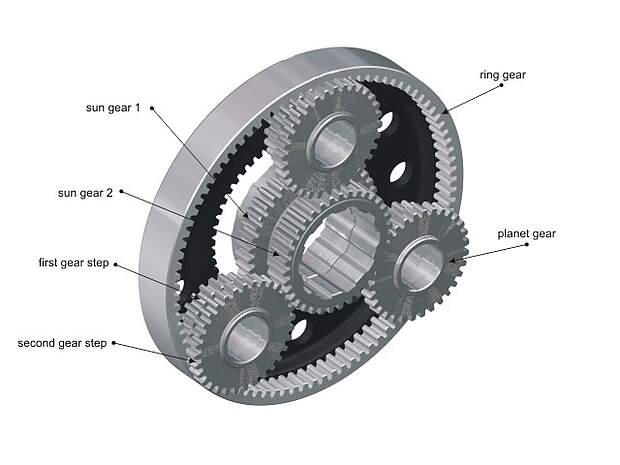
How does a sun gear contribute to changes in torque direction in gear systems?
A sun gear plays a crucial role in gear systems when it comes to changing the direction of torque. Let’s delve into the details of how a sun gear contributes to torque direction changes in gear systems:
- Planetary Gear Systems:
In planetary gear systems, the sun gear is one of the primary components along with the planet gears and the ring gear. These systems consist of one or more planet gears that mesh with both the sun gear and the ring gear. The arrangement of these gears allows for various torque direction changes.
- Torque Transmission:
The sun gear acts as a central driver in a planetary gear system. As power is applied to the sun gear, it transmits torque to the planet gears. The planet gears, in turn, engage with the ring gear, which ultimately transfers the torque to the output shaft or the desired component.
When the sun gear rotates in a specific direction, it imparts torque to the planet gears. The planet gears, due to their meshing with the stationary ring gear, distribute the torque evenly across all the gears. This torque transmission mechanism allows for the transfer of rotational force from the input (sun gear) to the output (ring gear or output shaft) of the system.
- Direction Reversal:
The unique configuration of a planetary gear system allows for torque direction changes. By manipulating the relative sizes and arrangements of the gears, including the sun gear, it is possible to reverse the direction of the torque output.
For instance, when the sun gear serves as the input and rotates clockwise, it causes the planet gears to rotate counterclockwise. This counterclockwise rotation, in turn, causes the ring gear to rotate in the clockwise direction, resulting in a torque reversal.
Similarly, by reversing the direction of the sun gear’s rotation, the torque direction can be reversed once again. This ability to change the torque direction makes planetary gear systems versatile and applicable in various mechanical and automotive applications.
- Torque Amplification and Reduction:
Another way the sun gear contributes to torque direction changes is through torque amplification and reduction. By incorporating different gear ratios within the planetary gear system, it is possible to alter the torque output relative to the input.
A specific arrangement of gear sizes, including the sun gear, can result in torque amplification. Torque amplification occurs when the output torque is greater than the input torque. This configuration can be beneficial in applications where increased torque is required, such as in heavy machinery or vehicles.
Conversely, torque reduction can be achieved by utilizing different gear ratios. By adjusting the sizes of the gears, including the sun gear, the output torque can be lower than the input torque. Torque reduction is useful in situations where precision control or lower torque output is necessary, such as in robotics or delicate machinery.
- Overall Torque Control:
The sun gear’s contribution to torque direction changes in gear systems provides a means of overall torque control. By manipulating the rotation direction and gear ratios, the torque can be directed, amplified, or reduced according to the specific requirements of the application.
Engineers and designers can utilize the sun gear, along with other gears in the system, to achieve the desired torque direction, torque amplification or reduction, and mechanical power transmission within gear systems.
In conclusion, the sun gear is a critical component in gear systems for changing torque direction. It enables torque transmission, facilitates torque direction reversal, contributes to torque amplification or reduction, and provides overall torque control within planetary gear systems and other similar gear configurations.
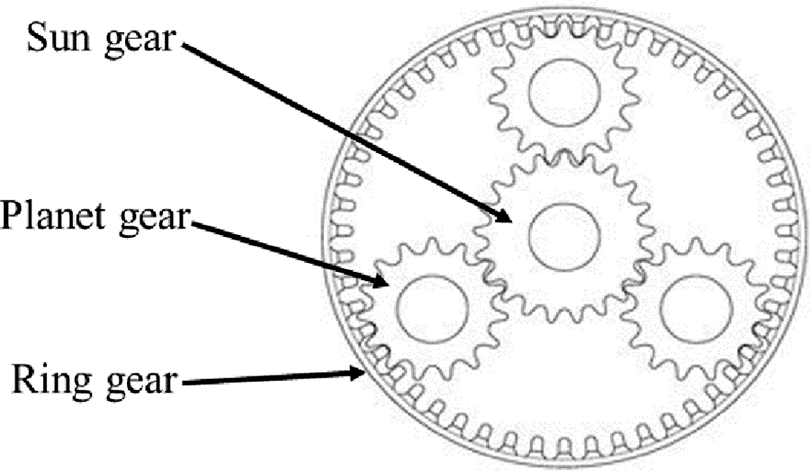
How does a sun gear handle variations in load and speed conditions?
A sun gear is designed to handle variations in load and speed conditions in mechanical systems. Its unique positioning and interaction within a planetary gear arrangement contribute to its ability to adapt to changing load and speed requirements. Here’s an explanation of how a sun gear handles variations in load and speed conditions:
- Load Distribution:
In a planetary gear system, the sun gear is located at the center and engages with multiple planet gears, which in turn interact with the outer ring gear. This configuration enables the sun gear to distribute the load among the planet gears. As the load on the system varies, the distribution of load among the planet gears adjusts accordingly. The load distribution mechanism allows the sun gear to handle variations in load conditions by effectively sharing the load across multiple contact points.
- Torque Amplification:
The arrangement of the sun gear, planet gears, and ring gear in a planetary system allows for torque amplification. By changing the number of teeth on the gears and their relative sizes, the gear ratio can be customized. This capability enables the sun gear to adapt to variations in load and speed conditions. When higher torque is required, the gear system can be configured to provide torque amplification by increasing the gear ratio. Conversely, when lower torque is needed, the gear ratio can be adjusted accordingly. This flexibility in gear ratio configuration allows the sun gear to handle variations in load and speed by adapting the torque output.
- Speed Regulation:
Another way the sun gear handles variations in load and speed conditions is through speed regulation. In a planetary gear system, the sun gear’s rotation speed is determined by the input speed and the gear ratio configuration. By adjusting the gear ratio, the rotational speed of the sun gear can be controlled. This speed regulation capability allows the sun gear to adapt to changing speed requirements. When higher speeds are necessary, the gear ratio can be adjusted to increase the rotational speed of the sun gear. Similarly, when lower speeds are desired, the gear ratio can be modified accordingly. The sun gear’s ability to regulate its rotational speed enables it to accommodate variations in load and speed conditions.
- Sturdy Construction:
Sun gears are typically constructed from durable materials such as hardened steel or other high-strength alloys. This robust construction enables them to withstand the forces generated by variations in load and speed conditions. The sturdy design of sun gears ensures that they can handle the stresses and strains associated with changing operating conditions without experiencing premature wear or failure.
In summary, a sun gear handles variations in load and speed conditions through load distribution among the planet gears, torque amplification or reduction based on the gear ratio configuration, speed regulation by adjusting the gear ratio, and its sturdy construction. These features enable the sun gear to adapt to changing requirements, ensuring reliable and efficient operation in various mechanical systems.
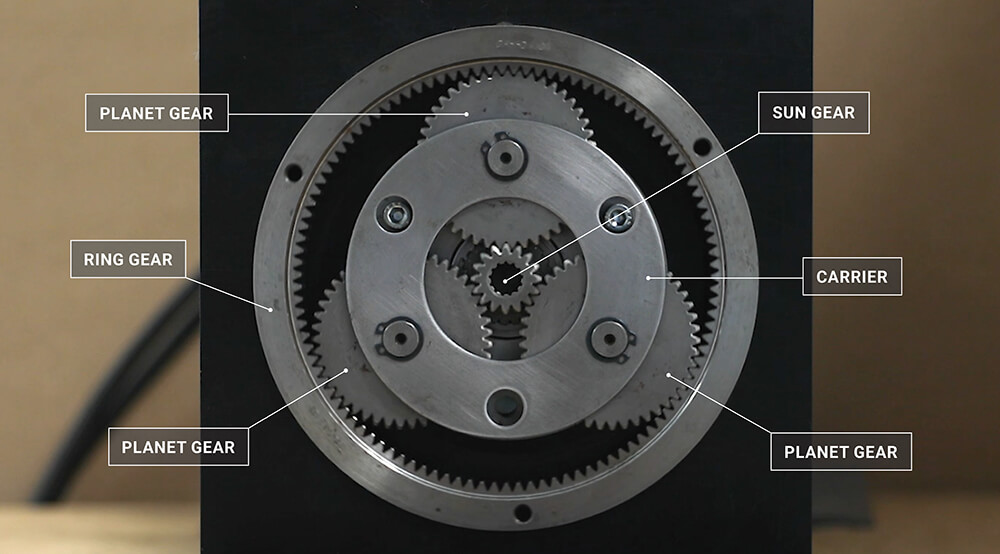
Can you explain the role of a sun gear in planetary gear systems?
The sun gear plays a crucial role in planetary gear systems, contributing to their unique functionality and versatility. Understanding the specific role of the sun gear within these systems helps in comprehending their overall operation. Here’s an explanation of the role of a sun gear in planetary gear systems:
- Power Input: The sun gear serves as the primary power input element in a planetary gear system. It receives rotational motion and torque from an external source, such as an engine or motor. This power input is transmitted to other gears within the system.
- Engagement with Planet Gears: One of the distinctive features of a planetary gear system is the interaction between the sun gear and multiple planet gears. The planet gears are smaller gears that surround the sun gear and mesh with both the sun gear and an outer ring gear. This engagement allows for the transfer of torque and motion between the gears.
- Power Distribution: As the sun gear rotates, it transmits torque to the planet gears through their meshing teeth. The planet gears, in turn, transfer the torque to the outer ring gear. This power distribution mechanism enables the sharing of torque among multiple gears within the system, allowing for load distribution and efficient power transmission.
- Gear Ratio Control: By changing the arrangement and sizes of the sun gear, planet gears, and ring gear, planetary gear systems can achieve different gear ratios. The number of teeth on the sun gear, planet gears, and ring gear, as well as their relative sizes, determine the gear ratio. This flexibility in gear ratio control enables planetary gear systems to provide various output speeds and torque levels, catering to different operational requirements.
- Torque Amplification: A key advantage of planetary gear systems is their ability to amplify torque. By employing a combination of the sun gear, planet gears, and ring gear, torque can be multiplied or reduced depending on the gear ratio configuration. This torque amplification feature is beneficial in applications where high torque output is required, such as automotive transmissions and heavy machinery.
- Directional Control: Another notable aspect of planetary gear systems is their directional control capability. By fixing or holding the sun gear while the ring gear or planet carrier is driven, the gear system can achieve different output directions, such as forward or reverse rotation. This directional control adds versatility to gear systems, enabling them to be used in various mechanical applications.
In summary, the sun gear in planetary gear systems serves as the power input element, engages with planet gears, distributes torque, controls gear ratios, provides torque amplification, and enables directional control. Its role is essential in achieving efficient power transmission, versatile gear ratios, and adaptable functionality in a wide range of mechanical applications.


editor by CX 2023-10-17