Gear Rack & Pinion Selection Guides
These articles are written around real buyer questions: when to use helical or straight teeth, when grinding is worth the cost, how long-travel rack drives compare with ball screws, and what installation details can change the performance of an otherwise good component.
Use the guides to prepare a better RFQ, not to replace the drawing
The articles explain decision variables and integration risks in plain engineering language. They do not assign a universal “best” product because the correct choice changes with load, speed, accuracy, environment and the mating drive components.
Where an article discusses typical practice, the final ordered specification should still come from the released drawing or the agreed application data.
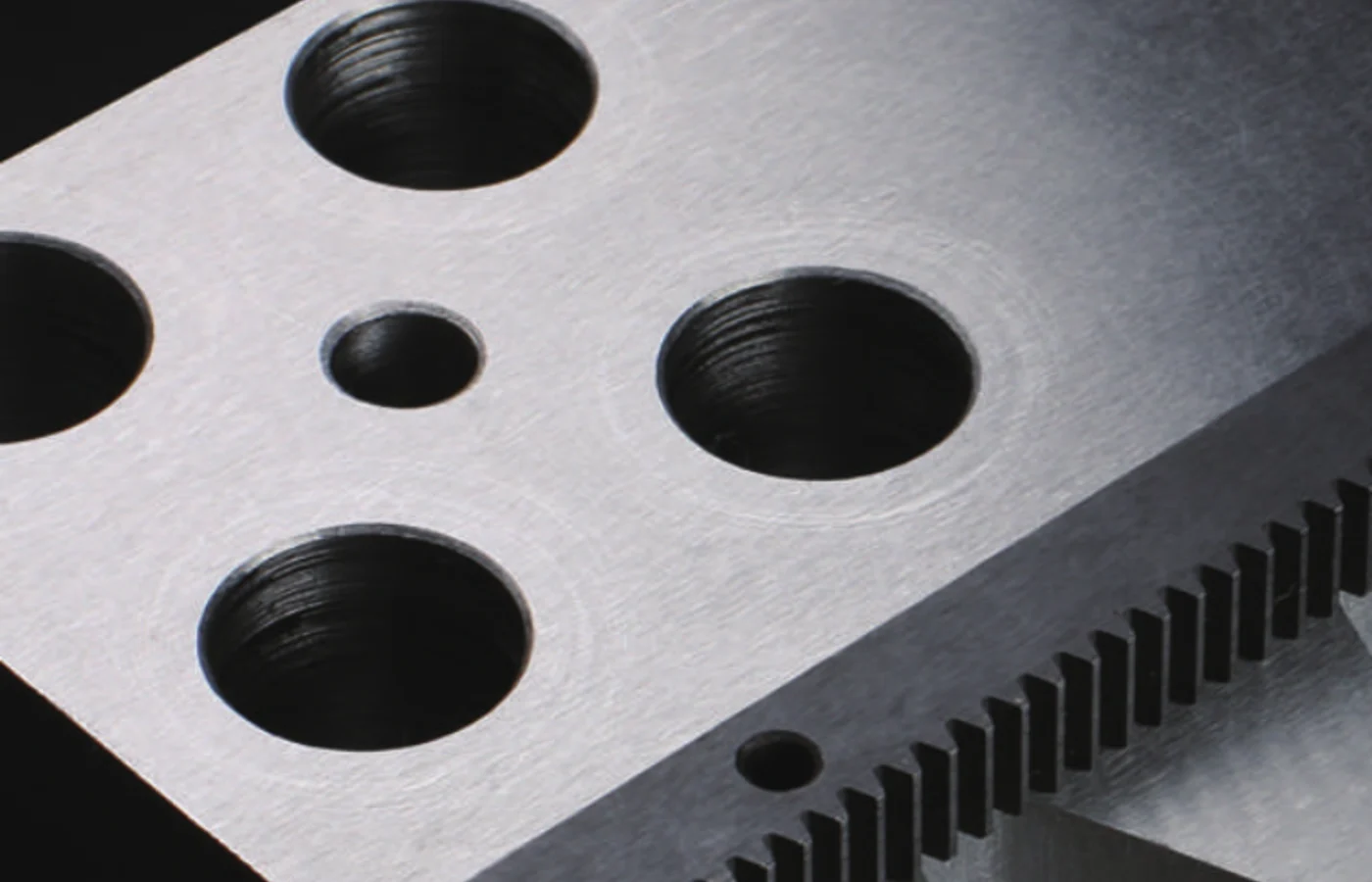
Compare, select, install and maintain
Start with the topic closest to the current decision. Each guide links back to the relevant product and application pages so the informational path returns to a practical quotation route.
How to Select a Gear Rack & Pinion Drive
A practical sequence from motion data to rack and pinion specification.
View detailsHelical vs Straight Gear Racks
Compare mesh behaviour, axial force, installation and application fit.
View detailsGround vs Milled Gear Racks
Choose the tooth-finishing route without over-specifying the axis.
View detailsWhat the resource library covers
Selection content focuses on tooth form, module, accuracy, manufacturing route and long-travel drive architecture. Integration content covers rack joints, alignment, pinion engagement and lubrication.
Senden Sie die Details, die das Teil definieren.
Ein aussagekräftiges Angebot beginnt mit der Geometrie und dem Betriebskontext. Senden Sie die Zeichnung, die Stückzahl und die Anforderungen an die Regelung; bei zahnstangengetriebenen Achsen fügen Sie bitte, falls vorhanden, Informationen zu Verfahrweg, Geschwindigkeit, Beschleunigung, Last und dem zugehörigen Ritzel oder Getriebe hinzu.
Bestellung: Die Mindestbestellmenge (MOQ) ist je nach Produkttyp und Bestellwert flexibel. Geeignete Muster für Neukunden umfassen 1–5 Stück; Bestellungen mit gemischten Modellen werden ab einem Gesamtwert von ca. 1.500 USD unterstützt, während Bestellungen von 1–2 Stück zu einem höheren Stückpreis möglich sind.
Timing & terms: Standardteile werden üblicherweise innerhalb von 10-25 Werktagen geliefert, kundenspezifische Komponenten innerhalb von 20-45 Werktagen und Projektausrüstung innerhalb von 45-120 Werktagen. EXW, FOB, CIF und DAP sind gängige Lieferbedingungen; FCA, CFR, CPT, CIP und DDP können im Einzelfall besprochen werden.