Gear Rack & Pinion Selection Guides
These articles are written around real buyer questions: when to use helical or straight teeth, when grinding is worth the cost, how long-travel rack drives compare with ball screws, and what installation details can change the performance of an otherwise good component.
Use the guides to prepare a better RFQ, not to replace the drawing
The articles explain decision variables and integration risks in plain engineering language. They do not assign a universal “best” product because the correct choice changes with load, speed, accuracy, environment and the mating drive components.
Where an article discusses typical practice, the final ordered specification should still come from the released drawing or the agreed application data.
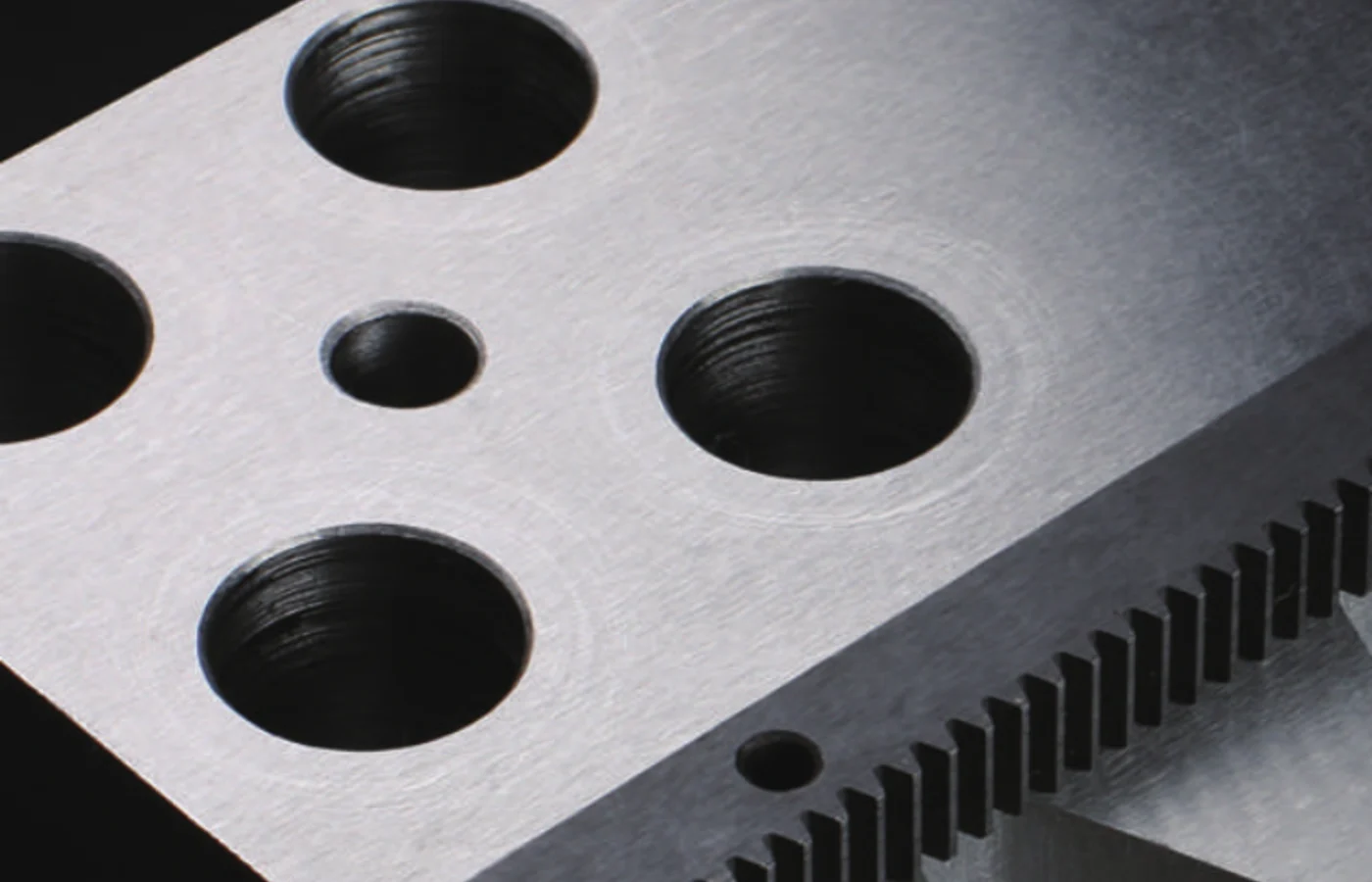
Compare, select, install and maintain
Start with the topic closest to the current decision. Each guide links back to the relevant product and application pages so the informational path returns to a practical quotation route.
How to Select a Gear Rack & Pinion Drive
A practical sequence from motion data to rack and pinion specification.
View detailsHelical vs Straight Gear Racks
Compare mesh behaviour, axial force, installation and application fit.
View detailsGround vs Milled Gear Racks
Choose the tooth-finishing route without over-specifying the axis.
View detailsWhat the resource library covers
Selection content focuses on tooth form, module, accuracy, manufacturing route and long-travel drive architecture. Integration content covers rack joints, alignment, pinion engagement and lubrication.
Send the details that define the part.
A useful quotation starts with the geometry and the operating context. Send the drawing, quantity and controlled requirements; for rack-driven axes, add travel, speed, acceleration, load and the mating pinion or gearbox information when available.
Ordering: MOQ is flexible by product type and order value. Suitable new-customer samples can be 1-5 pcs; mixed-model orders are supported around USD 1,500+ combined, while 1-2 pcs can be considered at a higher unit price.
Timing & terms: Standard parts are typically 10-25 working days, custom components 20-45, and project equipment 45-120. EXW, FOB, CIF and DAP are commonly available; FCA, CFR, CPT, CIP and DDP can be discussed case by case.